
The Middle East and North Africa (MENA) region finds itself in a critical moment of transition. As Syrians re-envision their country’s future following the fall of a 54-year entrenched and brutal Assad regime, as the people of Lebanon reimagine what a just political and economic future looks after a change in government following two years of stalemate, as Sudanese civilians mobilize to bring an end to the war, and as the people of Gaza reflect on what a just reconstruction may look like for them, women across the region have been disproportionately impacted in the lead-up to these moments. They have been targeted as journalists, first responders, and health care practitioners. They have been subject to political exclusion, harassment online and offline, arrest, and disappearance. And yet, women across all spaces—be they humanitarian aid workers, economists, political leaders, or advocates—have had and will continue to have a transformational impact on their societies and on the future trajectories of their countries.
This month, as the world marks International Women’s Day, the Tahrir Institute for Middle East Policy (TIMEP) is proud to host a virtual event on Tuesday, March 25 from 9:00 am EST to 10:30 am titled, “Women Reimagine the MENA Region” with Sana Mustafa, Hala Al-Karib, Paola Salwan Daher, and Myriam Sfeir, moderated by Micha Tobia. In a moderated discussion, our panelists will reflect on a number of key questions: How have women experienced and been impacted by these moments of conflict, atrocity, and political transition across Syria, Lebanon, Sudan, and Gaza? How have women mobilized across these contexts in response and what roles have they played? How have governments, international institutions, and humanitarian actors responded to the needs of women? As we look to the future of the region, what priorities are leading women voices and women-led movements advancing as they re-envision their country’s future? How are they navigating challenges, building bridges of solidarity, and looking ahead? And how can we best support them?
Watch the discussion:
Speaker Profiles:

Sana Mustafa
Sana Mustafa is a movement leader in the forced displacement sector and a feminist human rights activist fighting against systems of oppression in Syria and around the world. After being forcibly displaced by the Assad regime, Sana led the establishment of global efforts for the representation and inclusion of forcibly displaced persons such as the Global Refugee-led Network and the Resourcing Refugee Leadership Initiative—the first ever global fund by refugees, for refugees. Sana is a member of Syria’s first Syrian Women’s Political Movement, a coalition with the aim of uniting women from across professional fields and ethnic lines to create a vision for women’s inclusion in a future Syria. Currently, Sana manages her own consulting business where she works with leaders, organizations, philanthropists, and foundations across sectors on a variety of issues such as equitable resources mobilization, leadership and organizational developments, uplifting proximate leadership, and movement building.
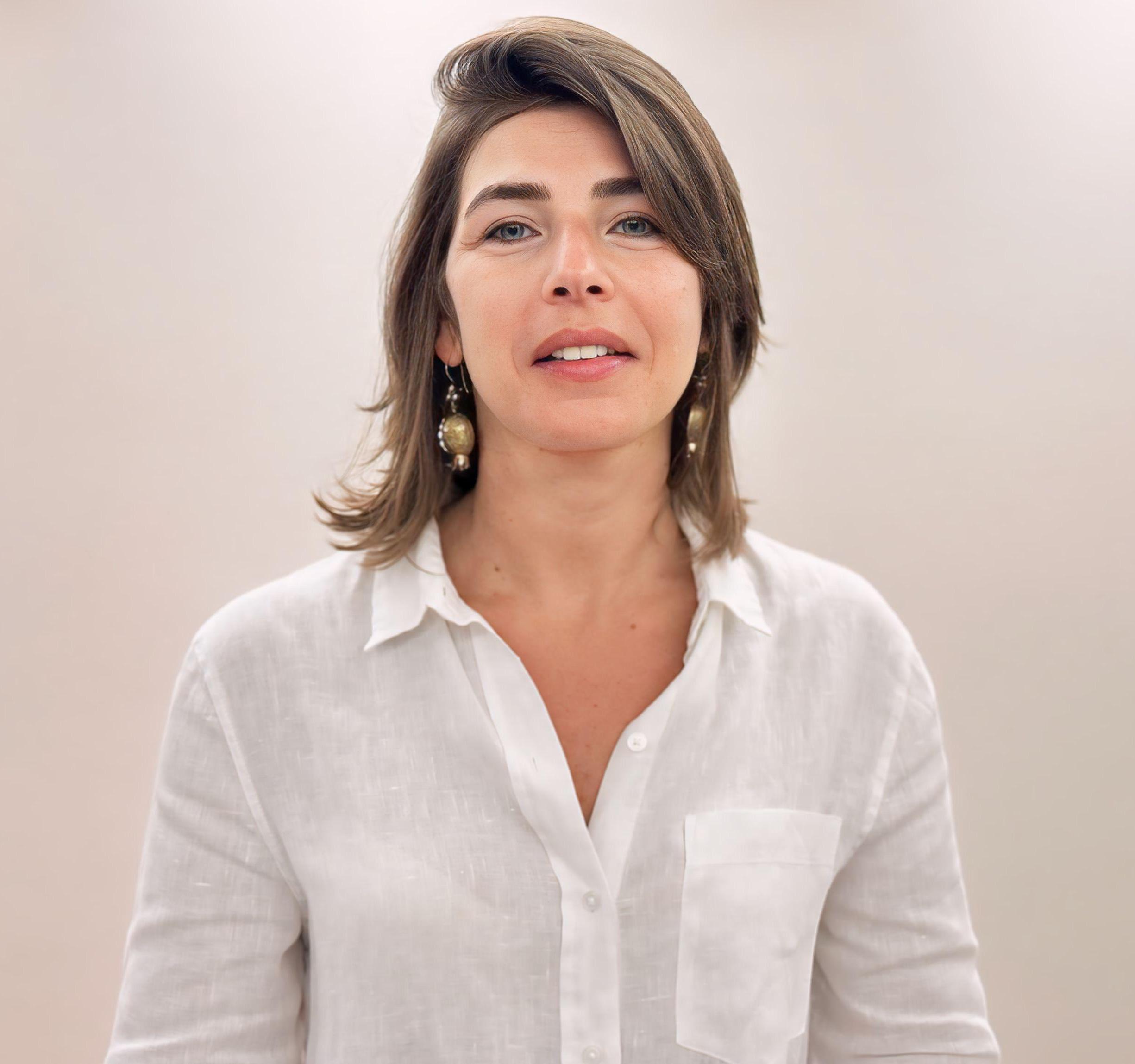
Myriam Sfeir
Myriam Sfeir is the Executive Director of the Arab Institute for Women (AiW) at the Lebanese American University. Previously, she served as Senior Managing Editor of Al-Raida, the double-blind peer-reviewed journal published by the AiW. She has over 25 years of experience working in women’s rights and gender equality and ample experience doing research, expert analysis, trainings, and teaching. She is an authority on women’s movement in Lebanon and has worked extensively on several groundbreaking projects related to oral history, movement building, marginalized groups, and has organized several international and regional conferences, film festivals, and panels that address gender rights and justice. She earned her B.A. in Philosophy from the American University of Beirut and her Master’s degree in Interdisciplinary Women’s Studies from the University of Warwick, United Kingdom.

Hala Al-Karib
Hala Al-Karib is the Regional Director of the Strategic Initiative for Women in the Horn of Africa (SIHA) Network. She is a Sudanese and African feminist, activist, and community organizer with over 20 years of experience working in Sudan, South Sudan, Eastern Africa, and the Horn of Africa. Her work focuses on supporting grassroots women and local communities’ ownership in their governance and development.

Paola Salwan Daher
Paola Salwan Daher is the Senior Director for Collective Action at Women Deliver. Before coming to Women Deliver, Paola worked at the Center for Reproductive Rights for 10 years, most recently as their Associate Director for Global Advocacy based in Geneva. Paola has worked in Beirut, Lebanon, at the Center for Research and Training on Development – Action, where she led on a project on women’s economic and social rights in Lebanon, Jordan, Egypt and Morocco. She was then the UN Representative of the Cairo Institute for Human Rights Studies in Geneva, where she focused on building and implementing a global advocacy strategy on civil and political rights in the Southwest and North Africa region. Paola has served on the Boards of Urgent Action Fund for Feminist Activism, a feminist emergency fund, and of the Arab Foundation for Freedoms and Equality, an LGBTIQ+ advocacy and service providing NGO based in Beirut. She was also a Senior International Fellow at the Asfari Institute for Civil Society and Citizenship at the American University of Beirut.

Micha Tobia
ModeratorMicha Tobia is the Editorial Manager at TIMEP. Her areas of interests are Middle Eastern politics and history, culture, and storytelling. Micha is the co-founder of Mashallah News, an online platform about the Arab world, Turkey, and Iran, which covers less told stories from the region’s cities. Prior to joining TIMEP, Micha worked at the Beirut-based think tanks The Policy Initiative (TPI) and the Lebanese Center for Policy Studies (LCPS). She holds a B.A. in Political Science and an M.A. in International Relations from the American University of Beirut.