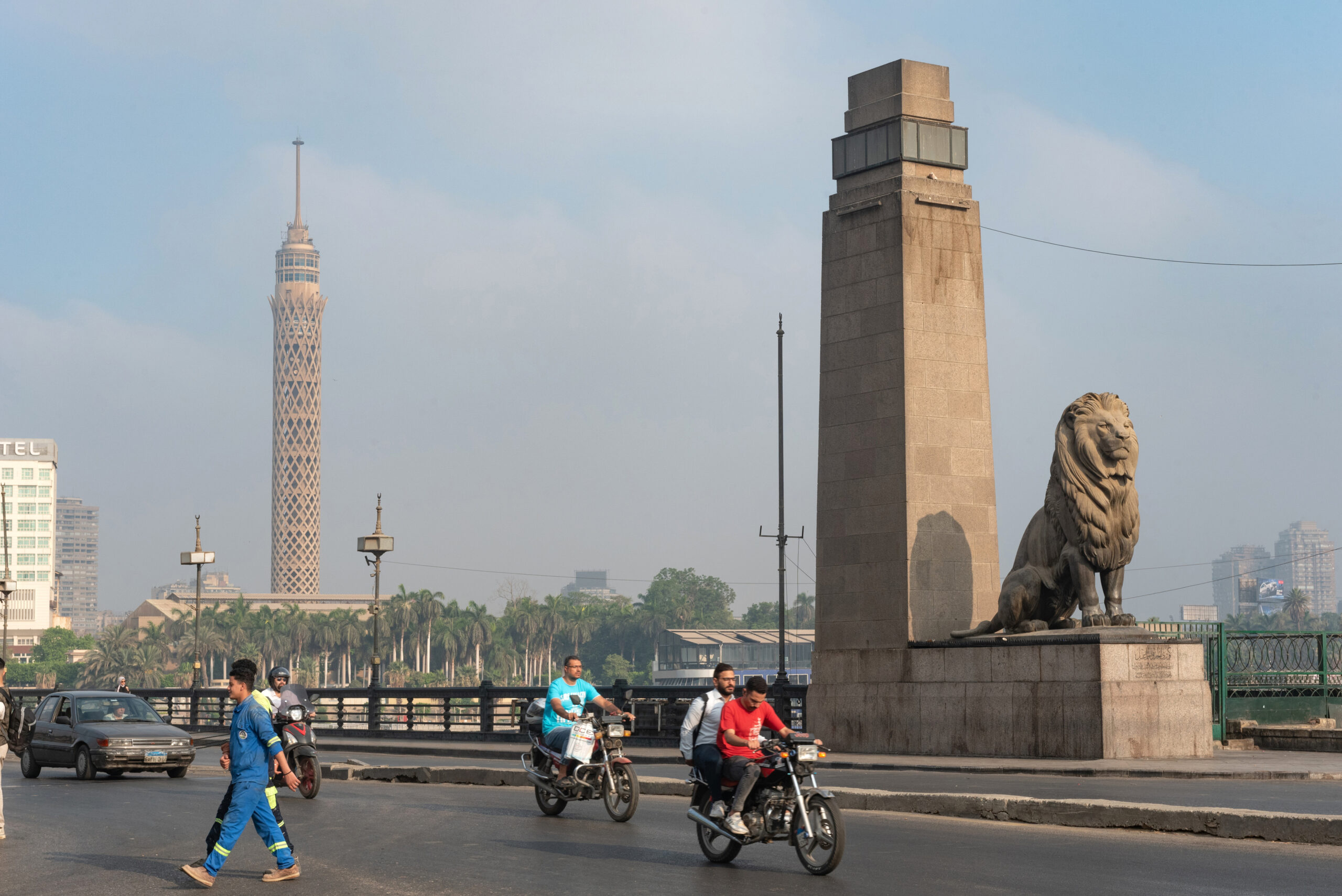
January marked the conclusion of Egypt’s longest House of Representatives elections in modern history. Conducted amid low voter turnout, widespread allegations of irregularities, and unprecedented legal interventions that annulled results in multiple constituencies, the elections ultimately produced a new 596-member House of Representatives. Beyond the unusually, highly contested process that laid bare the strains within the country’s security apparatus, the significance of this parliament lies in its timing. The newly elected House will be the last Parliament seated before the end of President Abdel Fattah al-Sisi’s third and constitutionally final term in 2030. Having already amended the constitution in 2019 to extend Sisi’s rule, observers have questioned whether the Parliament could once again be called upon to alter presidential term limits. Meanwhile, the drawn-out election unfolded against the backdrop of continued closing political and civic space as the country makes 15 years since the January 25 Revolution, a deepening economic crisis, and growing public frustration, as Egyptians grapple with a rising cost of living, deteriorating public services, and looming policy decisions such as a new rent law that threatens to displace millions living in rent-controlled housing. As Gulf relations shift, as the war in Sudan continues without end in sight, and as the conversation on what comes next in Gaza ensues, Egypt will be called upon to play a role in key global and regional contexts.
On Tuesday, January 27, at 10:00 AM EST, the Tahrir Institute for Middle East Policy (TIMEP) hosted “Egypt in 2026: What’s Next?”, an online moderated discussion featuring Nancy Okail, Samar Elhussieny, and Timothy Kaldas, moderated by Mai El-Sadany. The panel explored key questions: As the country enters 2026, how is the Egyptian state managing mounting economic pressure at home while pursuing external financial support, particularly in the context of a potential new IMF agreement? How will Egypt leverage its role in Gaza and Sudan in the coming year—as a mediator, security gatekeeper, or regional power broker? And with political trials continuing, deaths in detention continuing to be reported, and the space for political and civic contestation still closed, what developments and trends may we expect to see this year?
Watch the discussion:
Speaker Profiles:

Nancy Okail
Nancy Okail is President and CEO of the Center for International Policy. Dr. Okail is a leading scholar, policy analyst, and advocate with more than 20 years of experience working on issues of human rights, democracy, and security in the Middle East and North Africa region. In 2020, Okail was appointed as a visiting scholar at the Center for Democracy, Development and the Rule of Law (CDDRL) at Stanford University, focusing on accountability and the intersection of human rights and technology. Prior to joining Stanford, she served as Executive Director of the Tahrir Institute for Middle East Policy (TIMEP). Before coming to the United States, Okail worked on, managed, and evaluated foreign aid programs for several international organizations, including the World Bank and the United Nations Development Programme. In her subsequent role as Director of Freedom House’s Egypt program, Okail was one of the 43 nongovernmental organization workers convicted and sentenced to prison in a widely publicized 2012 case for allegedly using foreign funds to foment unrest in Egypt. She was then exonerated by a court ruling in December of 2018.
Samar Elhussieny
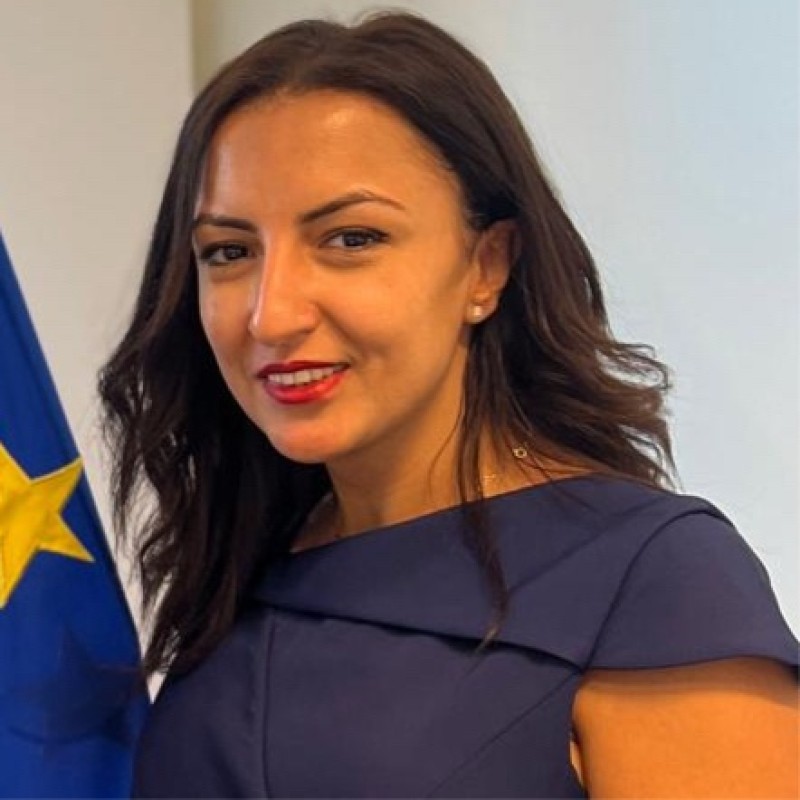
Samar Elhussieny is the Executive Director of the Egyptian Human Rights Forum (EHRF), an independent human rights organization based in Paris that works to promote and protect human rights in Egypt and to support Egyptian human rights defenders in exile. EHRF focuses on advancing the implementation of international human rights law, advocating for a human rights–based approach to democracy and the rule of law, and mainstreaming human rights within public policy debates. Samar has over a decade of experience in human rights advocacy, protection, and strategic engagement with UN mechanisms, EU institutions, and national stakeholders, with a particular focus on transnational repression, civic space, and the protection of human rights defenders and journalists. She has previously worked with regional and international organizations across the MENA region on issues related to gender, press freedom, and democratic governance.

Timothy Kaldas
Timothy E. Kaldas is the Deputy Director of the Tahrir Institute for Middle East Policy. He is also an adjunct professor of international relations at the Autonomous University of Barcelona where he is pursuing his PhD. His current research interests focus on the political economies of MENA countries, regime competition and survival strategies and Egypt’s foreign policy. He lived in Cairo, Egypt for 12 years from 2008 to 2020 where he worked in several fields including as a visiting professor of politics at Nile University, a wedding photographer, an independent risk consultant, a consultant at UN Migration, and Director of Communications at the Munathara Initiative.

Mai El-Sadany
ModeratorMai El-Sadany is the Executive Director of the Tahrir Institute for Middle East Policy (TIMEP). She is a human rights lawyer with a focus on the Middle East and North Africa (MENA) region. Throughout her career, she has worked to expand creative pathways to accountability, to leverage international and regional mechanisms to advance human rights, and to publish accessible analysis and scholarship on legal, judicial, and constitutional issues. She was previously TIMEP’s Managing Director and Legal and Judicial Director. Prior to that, she worked at the International Center for Not-for-Profit Law, Robert F. Kennedy Human Rights, and the Carnegie Endowment for International Peace, among other organizations.