
April 15, 2026, will mark three years since the war in Sudan broke out between the Sudanese Armed Forces (SAF) and the Rapid Support Forces (RSF). Caught in the middle of the belligerents, Sudanese civilians have been disproportionately impacted by what is now the world’s worst humanitarian and displacement crisis. The United Nations estimates that nearly 34 million people in the country will require assistance in 2026.
Women and girls continue to bear the sharpest impacts of the war in Sudan. More than half of the 12 million Sudanese who have been displaced from their homes since the war began are women and children. Recent estimates indicate that nearly 11 million women and girls are acutely food insecure, a crisis that is deeply rooted in structural inequalities that predate the war. Today, many women have exhausted their savings, sold livestock and belongings, and rely on shrinking humanitarian aid or community solidarity to survive. As conflict has devastated agriculture and disrupted markets, women’s already precarious livelihoods—often tied to small-scale farming and informal labor—have largely collapsed. An estimated 80 percent of women cannot afford or access clean water. Meanwhile, women and girls have been vulnerable to sexual and gender-based violence, enforced disappearances, abductions, and killings. Despite the fact that Sudanese women have been at the forefront of grassroots organizing, mutual aid efforts, and community support, they have been systematically excluded from the negotiating table.
Ahead of the three year mark, the Tahrir Institute for Middle East Policy (TIMEP) hosted on Monday, April 13, from 10:00 to 11:30 AM EST, “Women and War in Sudan: A Feminist Lens,” an online moderated discussion featuring Mahitab Mahgoub, Lina Marwan, Mayada Hassanain, and Jumana Eltgani, moderated by Douglas Christensen. Speakers addressed key questions: How have Sudanese women and girls experienced the war? How can humanitarian responses better support and resource women-led organizations operating on the frontlines of the crisis, and women and girls more generally? How can international actors move beyond short-term aid to support gender-responsive recovery in a context where conflict remains ongoing? What would it look like to meaningfully center Sudanese women in political, economic, and transitional justice processes to end the war and in its aftermath?
Watch the discussion:
Speaker profiles:

Mahitab Mahgoub
Mahitab Mahgoub is a Nonresident Fellow at TIMEP focusing on women, economy, and conflict in Sudan. She is a Sudanese feminist programs and advocacy professional with over a decade of experience working at the intersection of gender justice, governance, and socioeconomic rights. She has contributed to various high-level policy initiatives collaborating with governments, multilateral organizations, feminist coalitions, and academic networks. Currently, she works on Gender Equitable and Transformative Social Policies in the Africa project at SOAS University of London, where she continues to champion feminist policy agendas. Mahitab holds a Master’s in International Political Economy from King’s College London and a Master’s degree in Public Administration from the Central European University.
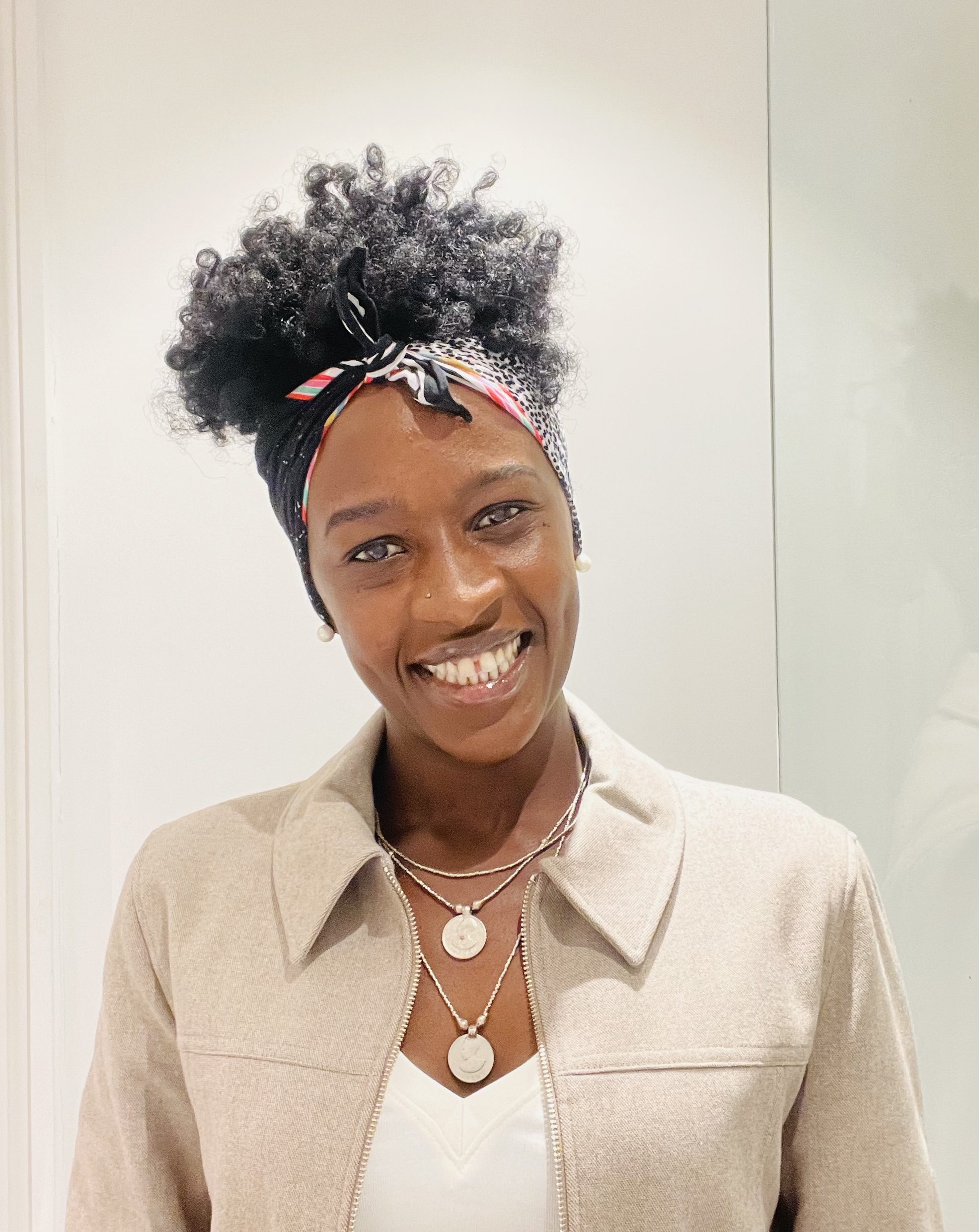
Jumana Eltgani
Jumana Eltgani is a gender justice advocate with several years of experience working alongside feminist and women’s groups in Sudan. Over the past three years of conflict, she has focused on supporting women-led advocacy calling for an end to the war, strengthening grassroots responses, and supporting the creation of space for Sudanese women to shape humanitarian and political discussions, both regionally and globally.

Lina Marwan
Lina Marwan is a Nonresident Fellow at TIMEP focusing on transitional justice in Sudan. She is a Sudanese feminist human rights lawyer and researcher with extensive experience in legal aid, access to justice, and the rule of law. She holds an LLM in Economic, Social, and Cultural Rights from the University of Essex, in the UK, where she studied as a Civil Society Leadership Award (CSLA) scholar. Lina is the cofounder of Insaf, a Sudanese transitional justice initiative that works to advance justice and accountability in the context of Sudan’s ongoing conflict and democratic transition. Throughout her career, she has worked with a range of national and international organizations on issues related to human rights, democracy, and transitional justice. Her professional background includes project management, strategic litigation, advocacy, and capacity-building. In addition to her legal work, Lina is a civil society activist with deep roots in grassroots organizing. She is an active member of several civil society networks across Sudan and the broader region, where she continues to champion women’s rights, democratic values, and inclusive peace and justice.

Mayada Hassanain
Mayada Hassanain is a Senior Program Officer at International Development Economics Associates (IDEAs). She is an economist with 15 years of experience in development and economics. Mayada was a Post Growth Fellow 2025. Her research interests include the political economy of Sudan, care and social reproduction, and their integration into Macroeconomic policy. She has published work in Feminist Africa and the African Studies Review.

Douglas Christensen
ModeratorDouglas Christensen is the Advocacy Manager at TIMEP. He holds an MA in Arab Studies from Georgetown University’s Center for Contemporary Arab Studies and a BA in Government with minors in Arabic and Mathematics from St. Lawrence University. Prior to joining TIMEP, he was the Liaison for US Government Affairs at Arab Center Washington DC as well as a research intern with the State Department’s Bureau of Human Rights, Democracy, and Labor. He has published numerous policy papers with Arab Center Washington DC and has published an academic article in the journal Protest. You can follow him on Twitter: @d_christensen9.