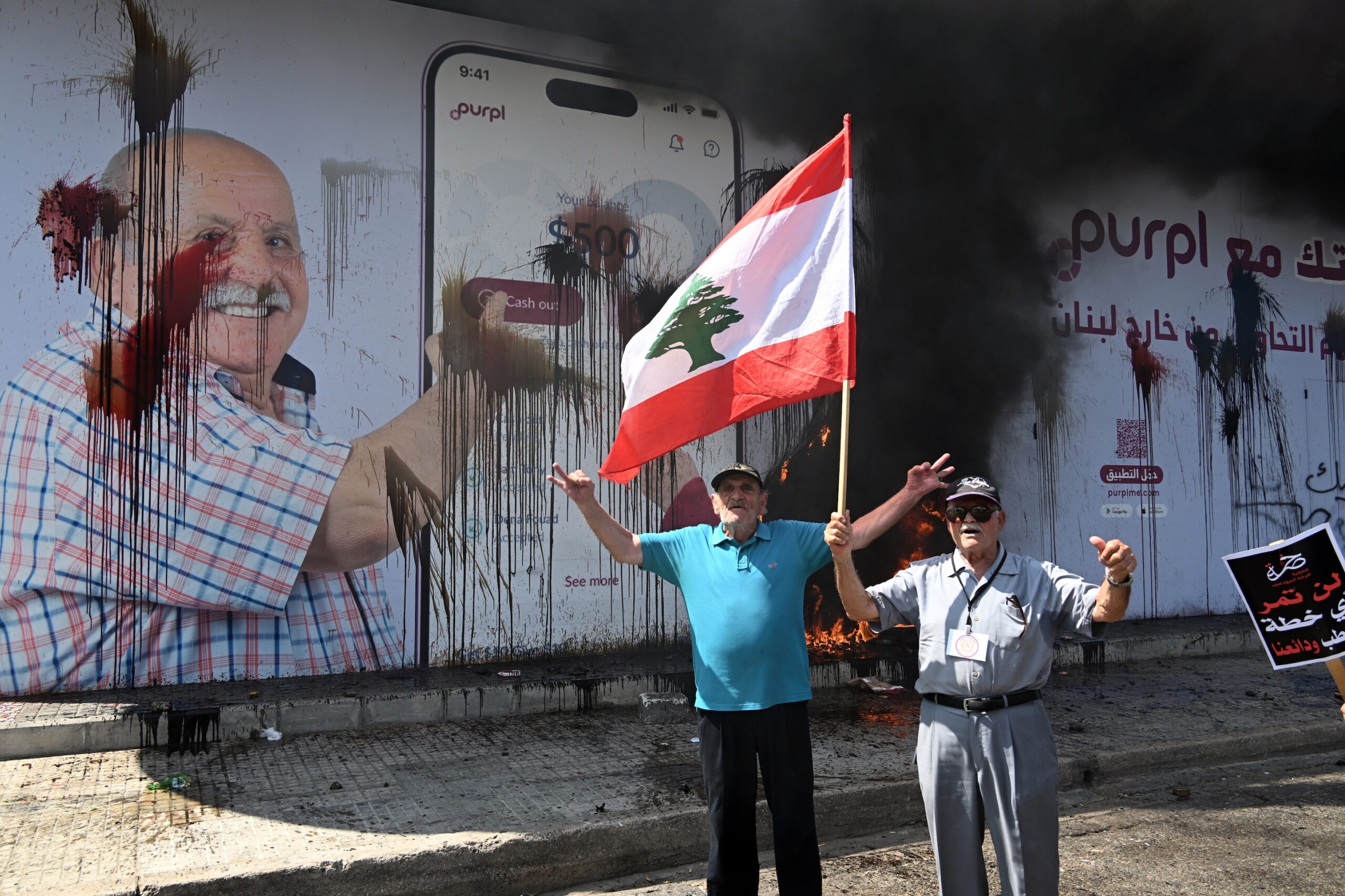
Since the 2019 financial collapse in Lebanon, citizens have watched their life savings turn into frozen digits in inaccessible bank accounts. That, combined with the collapse of the local currency and the unprecedented rise in poverty rates, has resulted in a sweeping social catastrophe affecting the lives of millions.
Amid this grim reality, legal and civic initiatives, many led by depositors themselves, have emerged to demand accountability for the financial collapse and the financial crimes that accompanied it. In this article, lawyer Dina Abou Zour, a member of the Depositors’ Union, discusses the hardships faced by depositors, the obstacles to achieving justice, and the possible pathways for restoring rights and reforming Lebanon’s financial system.
From your perspective as a Lebanese citizen and a lawyer representing victims of Lebanon’s economic collapse and the associated financial crimes, how has the crisis affected the daily lives of depositors and the broader population in Lebanon?
I never imagined that I would one day recount stories similar to those we once heard from our grandparents about the collapse of Lebanon’s currency in the 1980s. The financial breakdown Lebanon has endured since 2019 is not merely a matter of numbers; it is a catastrophic crisis that has had profound consequences for people in Lebanon and for those abroad who hold deposits in Lebanese banks. Depositors now find themselves pleading with banks for access to their own funds, anxiously monitoring circulars issued by the Central Bank in hopes of withdrawing small “allowances” from their savings. What was once a basic right, our ability to freely access our own money, has effectively disappeared.
Families have been unable to pay their children’s school and university tuition. Patients have struggled to cover the cost of medical treatment. Retirees have lost the savings of a lifetime and are being forced to return to work in whatever available field to put food on the table. Many young people and skilled professionals have emigrated in search of better opportunities, accepting living and working conditions that, despite their difficulty, were still better than the catastrophic living situation back home.
I cannot get over the shock of Sami, a retired pilot who lost his entire life savings without fully understanding what had happened. He was bewildered that his bank would not answer his questions, and was ultimately forced to rely on his son abroad to support him and his wife. Sami sadly passed away in 2023, and I am convinced he died heartbroken, as he often confided in me about his suffering.
Public trust, already fragile, has collapsed, leaving many Lebanese with little confidence in any financial or government institution, and in any prospect of meaningful reform
There is also Hasan, who was forced to bring his daughter back to Lebanon after failing to keep up with her university tuition and living expenses, despite the adoption of the so-called “student dollar” law. In practice, the absence of effective oversight meant that the law was implemented at the discretion of banks.
I also cannot forget Kawkab, a patient suffering from brain cancer who endured immense hardship trying to access her money to cover treatment at the American University of Beirut’s Medical Center. The bank repeatedly rejected her requests without the slightest empathy, ignoring all the medical reports she presented.
The consequences of Lebanon’s financial collapse have been far-reaching. Poverty exceeded any reasonable threshold, and soaring prices have deprived many of even the most basic standard of decent living. Essential services, including healthcare and education, have deteriorated significantly. The middle class has all but disappeared, with the crisis effectively dividing citizens into two groups: the wealthy who could withstand the shock, and the rest who were violently hurled into poverty. Public trust, already fragile, has collapsed, leaving many Lebanese with little confidence in any financial or government institution, and in any prospect of meaningful reform.
When it comes to financial crimes in Lebanon, a culture of impunity prevails, with political and economic elites shielding one another. What challenges do victims face in seeking accountability for these crimes, and what tangible progress have you and other actors achieved so far in pursuing justice?
Victims of the financial crisis and related financial crimes in Lebanon are up against a deeply entrenched political and banking system with extensive influence across state institutions. Political and financial elites have sought to obstruct any meaningful form of accountability or investigation into alleged financial misconduct. This has included exerting pressure on the judiciary and undermining its independence in order to derail investigations. At the legislative level, victims have also faced systematic obstruction of efforts to pass reform-oriented laws in parliament, particularly during the early years of the financial crisis.
Despite these obstacles, affected depositors have achieved important strategic gains by organizing themselves into civil unions and advocacy groups dedicated to defending their rights and pursuing accountability. One such organization is the Depositors Union.
The union has succeeded in securing a seat at the negotiating table with the International Monetary Fund and other key stakeholders working on Lebanon’s financial crisis. It has also built partnerships with local and international anti-corruption organizations in order to exchange expertise and sharpen advocacy strategies. And through lawyers representing depositors, the union has filed a number of lawsuits before Lebanese courts. Some of these cases remain under review, while others have already resulted in rulings in favor of depositors. Through all of this, the union and other civil initiatives keep pushing to make sure the rights of victims of financial crimes and economic collapse in Lebanon stay in the spotlight, both at home and abroad.
What would meaningful justice and effective accountability look like for those harmed by the financial collapse and the financial crimes associated with it?
Lebanon’s financial and banking crisis is a result of poor governance and management, alongside entrenched and sustained corruption operating under various labels, most notably the so-called financial engineering schemes that were initially promoted as tools to support the national currency and strengthen the country’s external economic position. In reality, these practices later turned out to be illegal mechanisms that enriched a narrow group at the expense of the state and the public.
Accordingly, achieving justice requires ensuring that those responsible are not shielded from accountability, that victims are compensated for the harm they have suffered, and that institutional and legislative reforms are enacted to restore the rule of law. In practical terms, this can be pursued through four key tracks:
First, the state must initiate a comprehensive audit of commercial banks and the Central Bank of Lebanon, as well as relevant institutions such as the Ministry of Finance. Such an audit would help determine the scale of the losses and expose the corruption and mismanagement that led to the collapse and identify those responsible.
Second, the Lebanese judiciary should act on the findings of the audit by pursuing legal action against all actors implicated in the financial crisis, including politicians, bankers, and public officials. For this process to be credible, the judiciary must enjoy sufficient independence and authority to overcome the political and legal immunity that shields perpetrators from prosecution. It must also be able to coordinate with ongoing judicial initiatives and accountability efforts outside Lebanon.
Third, a clear and transparent strategy must be developed to restore deposits and compensate those harmed by the economic collapse and related financial crimes. This strategy should guarantee equal treatment for all depositors while ensuring special protections for the most vulnerable groups, particularly small depositors. It must also be accompanied by the necessary legislation to enable its effective implementation.
Fourth, Lebanon must move forward with a comprehensive program of institutional and legislative reform aimed at preventing similar crises from recurring in the future.
For victims of financial crimes, what forms of legal, institutional, or societal support remain absent today?
The first groups that come to mind are the most vulnerable, particularly the elderly and retirees who lost their life savings, as well as individuals who have been denied access to their deposits at the very moment they needed them most. For many people, it is extremely difficult to accept that they may have lost everything, and equally difficult to believe that the legal system is capable of restoring their rights.
For this reason, what victims need today is an independent and impartial judiciary capable of adjudicating their cases free from the influence of political elites. They also need to know the truth about what actually happened: the causes of the financial crisis and who was behind it. They must be offered viable pathways for addressing it, starting with determining the scale of financial losses and establishing a transparent and equitable mechanism for returning deposits to their rightful owners, taking into account the diverse circumstances and humanitarian needs of depositors.
For many people, it is extremely difficult to accept that they may have lost everything, and equally difficult to believe that the legal system is capable of restoring their rights
In addition, it is essential to establish effective mechanisms to protect and provide legal support to whistleblowers and individuals who provide information about corruption. Many individuals remain reluctant to come forward with information, fearing potential repercussions.
Finally, victims also require tangible support in meeting their basic needs, including healthcare, education, and social protection. The cost of these services has risen sharply and they have become increasingly inaccessible to large segments of the population. The state must therefore take credible steps to safeguard these rights and ensure their provision to the public.
What steps is the government currently taking regarding legislative or institutional reforms, and what additional measures are needed to ensure reparations for victims and prevent similar financial crises in the future?
Unfortunately, the current government’s actions come six years too late. The previous government failed to propose serious solutions to the crisis. Instead, it handed the reins to former Central Bank Governor Riad Salameh who assumed a role that should have belonged to parliament, taking decisions that sought to regulate the crisis and define how banks dealt with depositors, which included the withdrawal cap that hurt so many people.
The record of the previous government is one of persistent negligence. In the years following the onset of the crisis, it failed to submit a capital control bill to parliament, a measure that would have imposed restrictions on capital outflows from banks. Banks, therefore, allowed politically connected individuals to transfer their funds while depriving ordinary depositors of accessing their monthly withdrawals that could have helped them deal with the crisis.
The previous government also squandered the opportunity to reach a final agreement with the International Monetary Fund in 2022 due to its failure to implement the legislative reforms required. For example, the banking secrecy law was amended at the time, but the changes fell short of what was needed. Worse still, the draft discussed in parliamentary committees differed from the one approved in the general assembly, which in turn differed from the final text published in the official gazette!
The current government, by contrast, has recognized the need for an accelerated legislative reform process. It amended the banking secrecy law again in April 2025 and passed a bank restructuring law in parliament in July 2025. However, that law is already under review for further amendment after numerous concerns were raised, particularly by the International Monetary Fund. The government has also introduced a financial gap law, which remains under debate in parliament. The draft is ambiguous in many respects and does not adequately reflect the fundamental standards for resolving financial and banking crises, such as initiating a forensic audit to determine responsibilities and clarify the scale and distribution of losses, among other technical requirements.
As a result, the roadmap for restoring deposits remains incomplete and requires substantial revision.
The government must also safeguard state assets, particularly Lebanon’s gold reserves, and ensure that these assets are not used to cover the financial gap under the pretext of “state responsibility” for losses, an approach that would effectively conceal the misconduct of banks and financial actors. These assets should not be part of the currently proposed solution. Instead, they could be used at a later stage, in a limited and strategic manner, to support the rebuilding of a productive and sustainable economy.
Finally, the government must take concrete steps to combat corruption within public administrations and institutions, moving beyond rhetoric to genuine enforcement. This requires implementing anti-corruption laws, reassessing the governance structures of public institutions, restructuring the Central Bank of Lebanon, and amending the Money and Credit Law.
How can individuals affected by financial crises play an effective role in accountability and justice processes, ensuring that their priorities remain central to any reform agenda?
Those harmed by Lebanon’s financial crisis should be recognized as key actors in any process of justice and reform. Their voices and participation should not be marginalized.
Affected individuals can play a significant role by organizing their efforts within the civil and legal frameworks that enable genuine discussions related to their rights. Excluding these voices from policy-making spaces risks sidelining their priorities and leaving these processes vulnerable to political bargaining and competing interests.
Hope, in circumstances such as ours, is not a luxury; it is a necessity for continuing the struggle to reclaim rights and pursue justice
For example, organizing depositors and building advocacy efforts around their priorities is the approach adopted by the Depositors Union. The union seeks to serve as an inclusive platform for depositors, enabling them to articulate their needs, define their priorities, and ensure that these concerns remain present in policy discussions. This objective is pursued through the development of policy proposals and practical strategies designed by economic and legal experts in consultation with affected stakeholders. At the same time, the union continues its advocacy and engagement with decision-makers, seeking to ensure that policy responses remain grounded in the rights and priorities of the people most affected by the crisis.
Do you still have hope of seeing positive outcomes from these efforts to confront financial crises and financial crimes in Lebanon?
Hope, in circumstances such as ours, is not a luxury; it is a necessity for continuing the struggle to reclaim rights and pursue justice. While many argue that delayed justice amounts to justice denied, I believe that justice should not expire with time, and that the pursuit of accountability is a duty before it is a right.
It is true that the outcomes may ultimately fall short of expectations. Yet remaining silent in the face of financial crimes and corruption would only entrench a culture of impunity and increase the likelihood that similar crises and abuses will recur in the future. For that reason, despite the considerable challenges surrounding justice, accountability, and reform in Lebanon, the choice remains clear: either to work toward changing the current reality and correcting its course, or to surrender to a status quo in which successive generations endure recurring crises and collective hardship.
Dina Abou Zour is a senior lawyer registered in the Beirut Bar Association, and is a founding member of the Depositors Union in Lebanon.