Dear President Trump, Secretary Mullin, and Secretary Rubio:
Under the leadership of African Communities Together (ACT), the undersigned 44 organizations request that your administration issue an 18-month extension and redesignation of Temporary Protected Status (TPS) for Sudan in response to ongoing armed conflict and extraordinary and temporary conditions in the country. The TPS designation for Sudan is set to expire on October 19, 2026. The initial conditions that led to the granting of TPS have not only persisted but have significantly worsened. An extension and redesignation of TPS for Sudan are crucial to protect current Sudanese TPS holders and those who have arrived in the United States since the last redesignation in 2025.
The ongoing violence, human rights violations, and humanitarian crises in Sudan continue to place its citizens at severe risk. Continuing TPS protection for Sudanese already residing in the United States is not only a humanitarian imperative but also aligns with the United States’ broader interests, including economic stability, security, and regional leadership. Sudan was first designated for Temporary Protected Status (TPS) on November 4, 1997, due to armed conflict and extraordinary and temporary conditions that prevented the safe return of Sudanese nationals. DHS repeatedly extended the designation for nearly two decades in response to continuing conflict, political instability, widespread human rights abuses, and humanitarian crises. Following Sudan’s October 2021 military coup, the Department of Homeland Security (DHS) announced a new TPS designation on March 2, 2022, citing political instability, violence, and extraordinary and temporary conditions that made return unsafe. After civil war erupted in April 2023 between the Sudanese Armed Forces (SAF) and the Rapid Support Forces (RSF), DHS extended and redesignated Sudan for TPS in 2023, citing ongoing armed conflict, widespread violence, severe humanitarian conditions, mass displacement, and serious human rights abuses. DHS again extended Sudan’s TPS designation in 2025 after determining that these conditions continued to prevent the safe return of Sudanese nationals.1
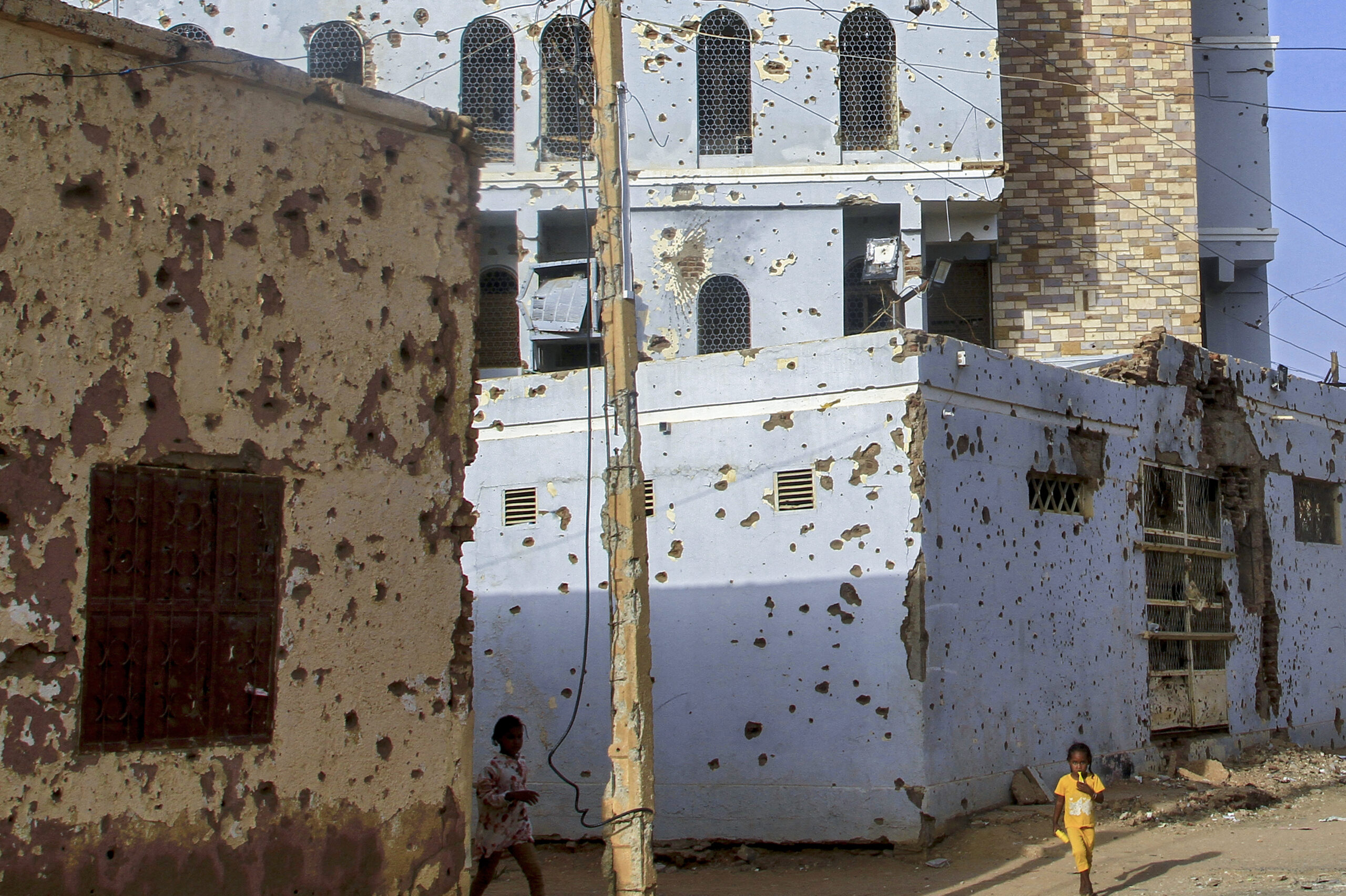
The armed conflict that erupted in April 2023 between the Sudanese Armed Forces (SAF) and the Rapid Support Forces (RSF) has intensified and expanded, causing one of the world’s worst humanitarian crises. Fighting has spread across much of the country, resulting in tens of thousands of deaths, the displacement of millions of people, widespread destruction of civilian infrastructure, severe food insecurity, and credible reports of war crimes and other serious human rights violations.2 Humanitarian access remains severely restricted, and large areas of Sudan continue to be unsafe for civilians, making the return of Sudanese nationals impossible under current conditions. Sudan continues to face catastrophic humanitarian conditions that have been compounded by climate shocks, widespread food insecurity, and the destruction of critical infrastructure. Since the outbreak of the civil war in April 2023, hospitals, schools, water systems, roads, and electrical infrastructure have been damaged or destroyed, severely limiting access to basic services and humanitarian assistance.3 The humanitarian crisis has reached unprecedented levels. More than 30 million people—over half of Sudan’s population—are in need of humanitarian assistance, including 15 million children. More than 10 million people are internally displaced, making Sudan the world’s largest internal displacement crisis. Millions more have fled to neighboring countries as refugees.4
Food insecurity has reached catastrophic levels. Famine has been confirmed or is projected in parts of the country, and millions of people face acute hunger. Children are among the hardest hit, with millions suffering from acute malnutrition, including hundreds of thousands requiring treatment for severe acute malnutrition.5 Humanitarian organizations continue to warn that funding shortfalls, ongoing insecurity, and restrictions on aid delivery are preventing life-saving assistance from reaching millions of people in need.6 These overlapping crises—ongoing armed conflict, mass displacement, widespread hunger, disease outbreaks, climate-related disasters, and the collapse of essential services—have significantly worsened since Sudan’s most recent TPS designation and continue to make the safe return of Sudanese nationals impossible.
The U.S. Department of State currently maintains a Level 4: Do Not Travel advisory for all of Sudan, warning U.S. citizens not to travel to the country due to ongoing armed conflict, civil unrest, crime, kidnapping, terrorism, landmines, and serious health and security risks.7 The State Department also notes that the U.S. Embassy in Khartoum has suspended operations since April 2023 and that the U.S. government cannot provide routine or emergency consular services to U.S. citizens in Sudan.8 These conditions underscore the continued instability throughout the country and further demonstrate that Sudan remains unsafe for the return of Sudanese nationals.
Extending and redesignating Temporary Protected Status for Sudanese nationals would also advance U.S. national security and foreign policy interests. The United States established diplomatic relations with Sudan after the country gained independence in 1956.9 Sudan occupies a strategically important position connecting the Horn of Africa, the Sahel, North Africa, the Middle East, and the Red Sea corridor. Instability in Sudan therefore has consequences that extend far beyond its borders. The continuing conflict has displaced millions of people, weakened state institutions, disrupted trade and humanitarian operations, and increased the risk of arms trafficking, organized crime, extremist activity, and wider regional instability. The collapse of public institutions and the prolonged absence of effective civilian governance may allow armed groups and other destabilizing actors to exploit vulnerable communities and ungoverned areas.
Providing TPS to eligible Sudanese nationals supports regional stability by preventing their forced return to an active conflict zone and reducing pressure on countries already hosting large refugee populations. It also reinforces U.S. diplomatic efforts to protect civilians, facilitate humanitarian assistance, support a transition to civilian government, and prevent the conflict from further destabilizing the Red Sea, the Sahel, and the Horn of Africa. Extending and redesignating TPS would therefore demonstrate the United States’ commitment to humanitarian protection while advancing its broader security and foreign policy objectives.
Extending and redesignating TPS for Sudanese nationals would also benefit the U.S. economy. TPS recipients consistently maintain high rates of workforce participation and help fill critical labor shortages across a range of industries. Nationally, more than 94% of TPS holders are employed, and they contribute to essential sectors such as healthcare, construction, transportation, hospitality, manufacturing, and retail.10 Far from being a burden on public resources, TPS holders are taxpayers, consumers, entrepreneurs, and integral members of their communities. According to the American Immigration Council, TPS holders collectively generated more than $10.3 billion in household income, possessed $8 billion in spending power, and contributed over $2.2 billion in federal, state, and local taxes in 2021 alone.11 They also support local economies by purchasing homes, renting apartments, starting businesses, and filling jobs that many U.S. employers struggle to fill.12 Although Sudanese TPS beneficiaries represent only a portion of the overall TPS population, they likewise contribute to the U.S. workforce and economy while lawfully employed under TPS. Given the ongoing armed conflict and humanitarian catastrophe in Sudan, extending and redesignating TPS would allow eligible Sudanese nationals to continue supporting the U.S. economy and their families while remaining protected from being returned to conditions that pose a serious threat to their lives and safety.
The ongoing armed conflict, catastrophic humanitarian conditions, and widespread human rights abuses in Sudan make the safe return of Sudanese nationals impossible at this time. Extending and redesignating Temporary Protected Status (TPS) would provide critical humanitarian protection to individuals who cannot safely return while advancing U.S. national security and foreign policy interests and supporting the American economy through continued workforce participation. Most importantly, it would reaffirm the United States’ longstanding commitment to protecting individuals fleeing armed conflict and extraordinary conditions.
Sincerely,
National
African Communities Together (ACT)
Alianza Americas
American Friends Service Committee (AFSC)
Asian Americans Advancing Justice | AAJC
Belarus Freedom Forum
Catholic Legal Immigration Network, Inc.
Center for Gender & Refugee Studies
Church World Service
Communities United for Status & Protection (CUSP)
Detention Watch Network
Freedom for Immigrants
Grantmakers Concerned with Immigrants and Refugees
Human Rights First
Immigrants Act Now
Justice in Motion
Lawyers for Good Government
League of United Latin American Citizens (LULAC)
National Association of Social Workers
Nicaraguan American Legal Defense and Education Fund, NALDEF
Nigerian Center
Presidents’ Alliance on Higher Education and Immigration
Refugee Advocacy Lab
Refugee Council USA
Refugee Congress
Refugees International
Service Employees International Union (SEIU)
Sisters of Mercy of the Americas – Justice Team
The Tahrir Institute for Middle East Policy (TIMEP)
The Workers Circle
U.S. Committee for Refugees and Immigrants
Unitarian Universalist Service Committee (USCRI)
We are CASA
State/Local
Adhikaar For Human Rights and Social Justice
Ayuda
Central American Resource Center – CARECEN of Northern California
Family Action Network Movement
Immigrant Defenders Law Center (ImmDef)
Immigrant Legal Advocacy Project (ILAP)
Maine Immigrants’ Rights Coalition
Miami Valley Immigration Coalition
Ohio Immigrant Alliance
Services, Immigrant Rights and Education Network (SIREN)
STRANGERS NO LONGER (Michigan)
Texas Black Migrant Ecosystem
The Advocates for Human Rights
- U.S. Department of Homeland Security. (2025, January 17). Extension of the designation of Sudan for Temporary Protected Status. Federal Register, 90(11), 5944–5953.
https://www.federalregister.gov/documents/2025/01/17/2025-00770/extension-of-the-designation-of-sudan for-temporary-protected-status ↩︎ - Ferragamo, M. (2026, April 14). Sudan’s humanitarian crisis, explained. Council on Foreign Relations. https://www.cfr.org/articles/what-extent-sudans-humanitarian-crisis ↩︎
- USA for UNHCR. (2025, April 9). Sudan crisis explained. https://www.unrefugees.org/news/sudan-crisis explained/ ↩︎
- International Rescue Committee. (2026, July 6). Crisis in Sudan: What is happening and how to help. https://www.rescue.org/article/crisis-sudan-what-happening-and-how-help ↩︎
- World Food Programme. (n.d.). Risk of famine in Sudan. https://www.wfp.org/emergencies/sudan ↩︎
- UNICEF. (2026, May 15). Risk of famine persists as nearly 19.5 million people face acute food insecurity in Sudan.https://www.unicef.org/press-releases/risk-famine-persists-nearly-195-million-people-face-acute food-insecurity-sudan ↩︎
- U.S. Department of State. (2026, May 15). Sudan travel advisory. Travel.State.Gov. https://travel.state.gov/en/international-travel/travel-advisories/sudan.html ↩︎
- U.S. Embassy Sudan. (2026, May 15). Travel advisory: Sudan (May 2026).
https://sd.usembassy.gov/travel-advisory-sudan-may-2026/ ↩︎ - U.S. Department of State. (2024, July 29). U.S. relations with Sudan. https://2021-2025.state.gov/u-s relations-with-sudan/ ↩︎
- Czarnecki, J. (2021, June 28). The value of Temporary Protected Status as a U.S. policy tool. Niskanen Center. https://www.niskanencenter.org/the-value-of-temporary-protected-status-as-a-u-s-policy-tool/ ↩︎
- Aho, K. (2023, October 23). Spotlight on the economic contributions of TPS holders. American Immigration Council. https://www.americanimmigrationcouncil.org/blog/economic-contributions-tps-holders/ ↩︎
- FWD.us. (2026, April 21). Temporary Protected Status protects families while also boosting the U.S. economy. https://www.fwd.us/news/temporary-protected-status-report/ ↩︎