
TIMEP is delighted to announce the 11 members of its 2025-2026 Nonresident Fellowship cohort!
As Syria and Lebanon embark on a critical reconstruction and rebuilding process, as Sudan remains caught in a war on civilians, and as agreements are struck to keep migrants in Tunisia and off of European shores, policymaking in and on the Middle East and North Africa (MENA) region is in critical need of the voices of those living the impact of these policies. TIMEP’s fellowship program does just that, positioning rising leaders from and in the MENA region to bring country and thematic expertise and lived experience into the policy discourse, while offering a space of one year for fellows to hone their skills, build up their expert profile, and make impactful linkages across the region toward solidarity and collaboration.
Throughout their one-year fellowship, TIMEP’s 2025-2026 nonresident fellows will undertake innovative programming and produce cutting-edge analysis on the MENA region’s top challenges in Egypt, Tunisia, Sudan, Syria, and Lebanon. With diverse backgrounds in journalism, law, economics, data science, organizing, and more, they come together to partake in creative problem solving, to craft and advance an alternate set of policies, and to articulate an alternative vision for the future of the region.

Lina Ghoutouk is a Syrian researcher and human rights specialist with over a decade of experience in the humanitarian and research sectors. Originally from the city of Homs in Syria, Lina has led several research initiatives aimed at promoting a conflict-sensitive approach to the city’s reconstruction and healing its fractured social fabric. She aims to advocate for the rights of Syria’s invisible victims—those who are often marginalized or erased from public discourse and transitional justice discussions. Read her full bio here.
Fellowship Mandate: Transitional Justice (Syria)
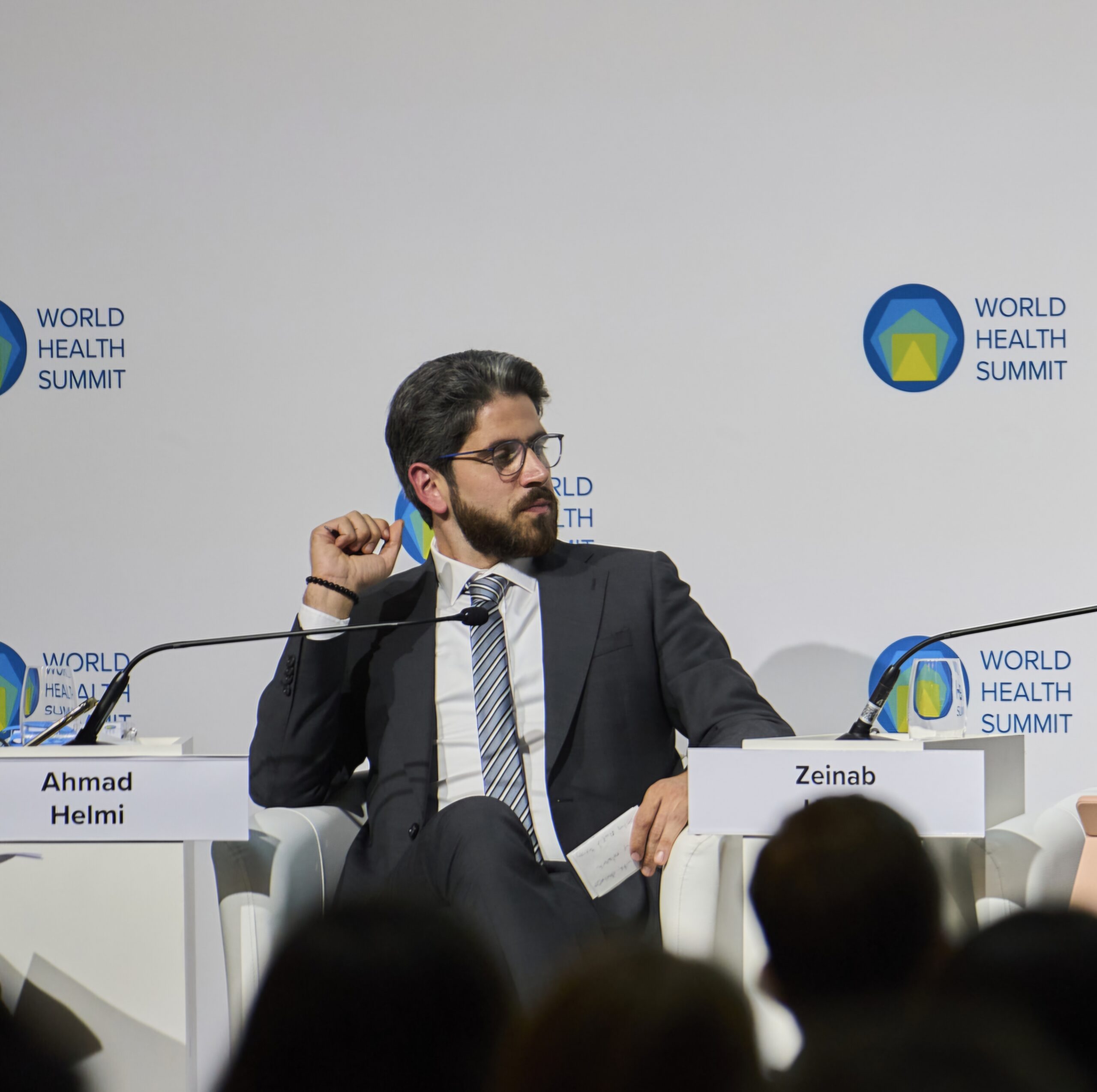
Ahmad Helmi is a nonviolent Syrian activist, speaker, and storytelling coach who, for over a decade, has been at the forefront of the fight for justice and human rights in Syria and the region. He endured three years of imprisonment and torture in Syria for his peaceful activism. Following his release, Ahmad founded the TA’AFI Initiative, a Syrian survivor-led organization which provides critical support and protection to victims of enforced disappearance and torture. Ahmad was also instrumental in the establishment of the Independent Institution on Missing Persons in Syria (IIMP) at the United Nations in 2023. Read his full bio here.
Fellowship Mandate: Just Economic Recovery (Syria)

Samy Akil is a political analyst specializing in Middle Eastern affairs with a focus on Syria and a particular interest in political transition, diplomacy, and security. He held advisory roles with the International NGO Safety Organization (INSO), where he provided contextual analysis on conflict dynamics in Northwest Syria; and GIZ, where he supported the UN-led peace process as part of the agency’s Syria Peace Initiative. Samy is also a founding member of the Change for Syria Network (C4S), a grassroots initiative promoting youth participation in Syria’s political, civic, and cultural spheres. Read his full bio here.
Fellowship Mandate: Politics and Security (Syria)

Justin Salhani is a writer and journalist based in Beirut. Since 2023, Justin has been a senior producer with Al Jazeera Digital, where he covers politics and society in Lebanon and Syria. He has been covering the region since 2011 and has reported from Lebanon, Syria, Iraq, Jordan, Turkey, Egypt, Kuwait, Qatar, France, Italy, and the United States. Justin has also contributed to Time Magazine and Dial Magazine and is a regular contributor to the From the Periphery media collective’s podcast series. Read his full bio here.
Fellowship Mandate: Misinformation and Disinformation (Levant)

Jean Kassir is a political organizer and media professional, and the cofounder and managing director of Megaphone, a Beirut-based independent digital media outlet whose critical journalism highlights issues impacting marginalized communities. Since 2011, Jean has been active in several political campaigns and collectives that offer an alternate path for Lebanon in response to decades of status quo, such as Mada Network and Beirut Madinati, which sought to reclaim Beirut’s municipal council. Jean worked previously at Amnesty International on campaigns protecting individuals at risk across the MENA region. Read his full bio here.
Fellowship Mandate: Governance, Politics, and Economy (Lebanon)
Jean is also this year’s Mohamed Aboelgheit fellow.

Shehrazade El-Hajjar is a legal researcher who has worked on public policy and reforms since 2019. At the Beirut-based research and advocacy organization Legal Agenda, Shehrazade regularly published analyses of draft laws and court decisions, particularly related to anti-corruption legislation and institutional reforms, and contributed to the drafting of a law on the independence of the Administrative Courts. She currently works as a legal researcher at the International Commission of Jurists. Read her full bio here.
Fellowship Mandate: Accountability and Legal Reform (Lebanon)

Mahitab Mahgoub is a Sudanese feminist programs and advocacy professional with over a decade of experience working at the intersection of gender justice, governance, and socioeconomic rights. She has contributed to various high-level policy initiatives, collaborating with governments, multilateral organizations, feminist coalitions, and academic networks.
Currently, she works on Gender Equitable and Transformative Social Policies in the Africa project at SOAS University of London, where she continues to champion feminist policy agendas. Read her full bio here.
Fellowship Mandate: Women, Economy, and Conflict (Sudan)
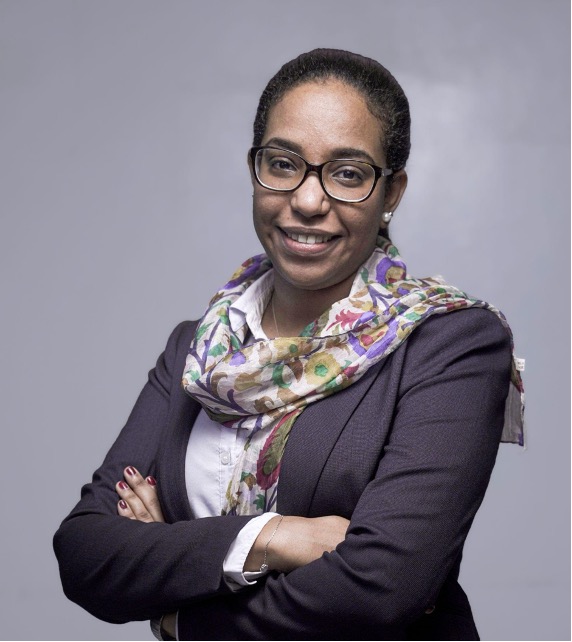
Lina Marwan is a Sudanese feminist human rights lawyer and researcher with extensive experience in legal aid, access to justice, and the rule of law. She is the cofounder of Insaf, a Sudanese transitional justice initiative that works to advance justice and accountability in the context of Sudan’s ongoing conflict and democratic transition. Throughout her career, she has worked with a range of national and international organizations on issues related to human rights, democracy, and transitional justice. In addition to her legal work, Lina is a civil society activist with deep roots in grassroots organizing. Read her full bio here.
Fellowship Mandate: Transitional Justice (Sudan)

Sarah Hamza is a human rights defender and data scientist with over 13 years of experience working across the MENA region. She integrates legal research, data systems, and advocacy to document human rights violations, support strategic litigation, and preserve collective memory in repressive contexts. Her work has focused on enforced disappearances, torture, the death penalty, arbitrary detention, and civic space repression. Her work bridges technical expertise with grassroots knowledge, transforming complex data into accessible, actionable tools for justice. Read her full bio here.
Fellowship Mandate: Documentation and Justice (MENA)
Sarah is also this year’s Sarah Hegazi fellow.
Dina Kamel brings nearly a decade of experience as a legal researcher specializing in Egypt’s criminal justice system. She has a background in human rights, political science, and law. Throughout her career, Dina has documented, analyzed, and advocated to address human rights violations in Egypt. Dina has previously worked with a number of local and international human rights organizations and media outlets. Read her full bio here.
Fellowship Mandate: Rule of Law (Egypt)

Iyed Hamadi is a Tunisian researcher and humanitarian professional who has worked on crisis response, forced displacement, and border governance across Africa and Latin America. Iyed has supported refugees and displaced populations during some of the most underreported humanitarian emergencies, including the Sudanese refugee crisis in eastern Chad, the detention and return of migrants in Libya, and the unfolding displacement crisis on Honduras’ southern border. His work critically examines how donor-driven policies and border externalization frameworks impact migrants’ rights, local governance, and humanitarian neutrality. Read his full bio here.
Fellowship Mandate: Migration and Displacement (Tunisia)
Interested in getting in touch with TIMEP’s fellows? Reach out to press@timep.org.