This brief is part of the project “Law in Brief: Syria’s Transition” by TIMEP’s Legal Unit.
Since the establishment of the Syrian National Commission for Transitional Justice (NCTJ) by Decree No. 20 in May 2025, Syrian and international rights organizations and experts have criticized its limited mandate, as it focuses solely on the serious violations “caused by” the Assad regime. In response, the NCTJ has claimed that it interprets the violations “caused by” the former regime as also encompassing all those committed by other parties, for their violations would not have occurred if not for the Assad regime’s initial actions. This interpretation has drawn criticism for the legal gymnastics that it adopts, and civil society organizations and experts have called for all future transitional justice frameworks, strategies, and laws to recognize in explicit wording the inclusion of crimes committed by all parties to the conflict, regardless of their identity or affiliation.
In this context, in late 2025, the NCTJ circulated the first version of a draft Transitional Justice Law among a group of civil society organizations and experts for feedback. Since then, the draft has undergone several iterations, with the latest version circulated in August 2026. Despite broader calls for the NCTJ to first issue a national transitional justice strategy that would govern the broader context within which a law is discussed, approved, and ratified, no national strategy has been released as of the writing of this brief.
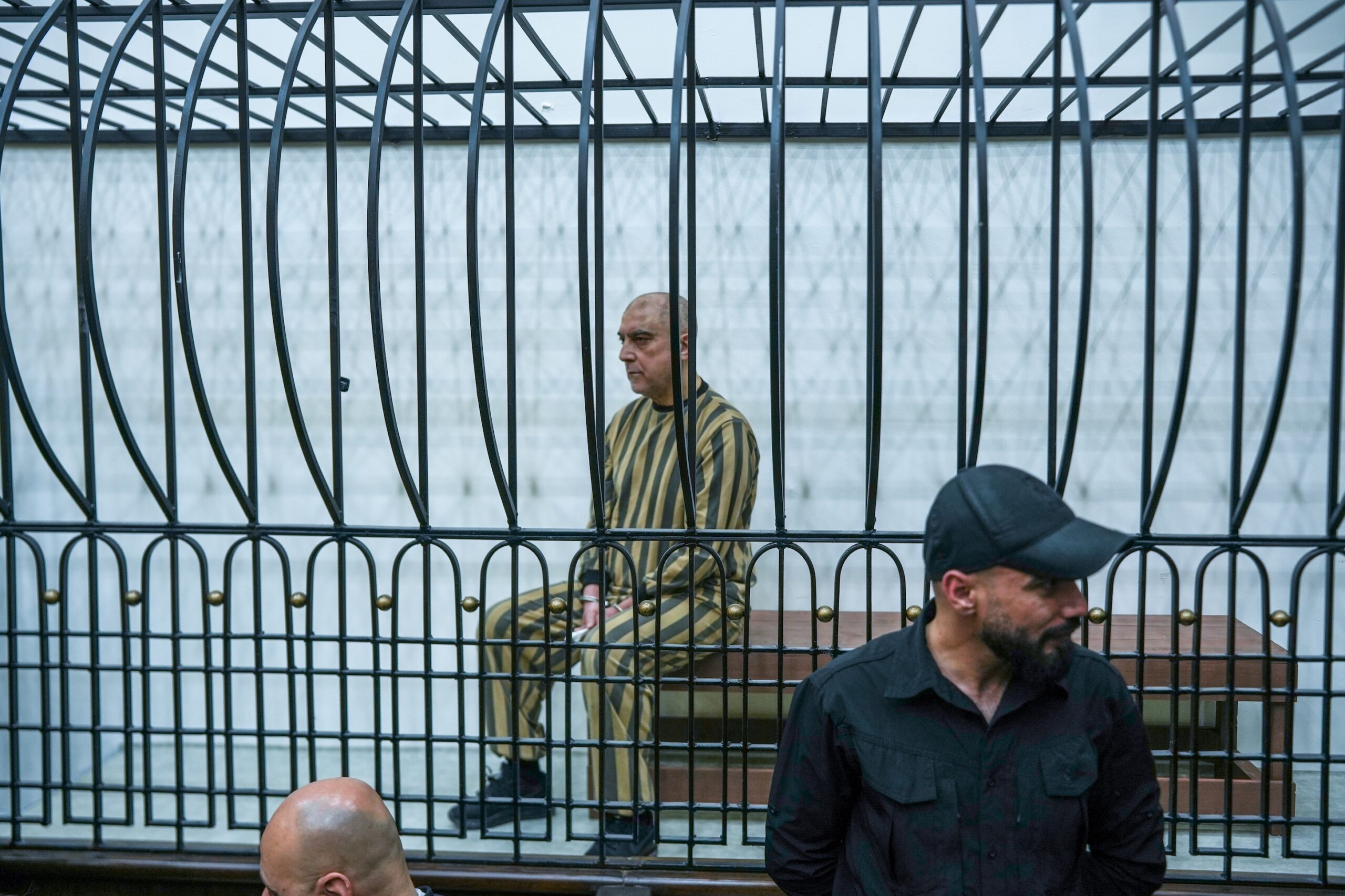
Meanwhile, the transitional justice process has seemingly begun; prosecutions against figures associated with the Assad regime have started, and sentences, including death penalties, have been handed down despite the lack of a national transitional justice strategy and a Transitional Justice Law.
Key takeaways
The version of the draft Transitional Justice Law circulated in August 2026 consists of 70 articles that cover, among other things, the mandate of the law and provisions governing the key transitional justice mechanisms that Syria expects to establish as part of its transitional justice process: Criminal accountability, truth-seeking, reparations, reforms and guarantees of non-repetition, reconciliation and peacebuilding, and memorialization. The draft also outlines the role and responsibilities of the NCTJ, which comprises six directorates, each responsible for one of the mentioned mechanisms.
According to the draft, the law aims to address the legacy of past abuses in Syria by “revealing the truth, providing redress for victims, holding perpetrators of serious violations accountable, reforming institutions, and preserving national memory in a way that prevents the recurrence of past atrocities, restores citizens’ trust in the state, and establishes the state’s legitimacy on the ground of respecting human rights and protecting human dignity.” The draft sets out principles to guide the transitional justice process, including combating impunity, adopting a victim-centered approach that guarantees victims’ meaningful participation, and upholding transparency, independence, and adherence to international standards. While the articulation of these objectives and principles is welcome, some core provisions necessary to achieve them are either missing or fall short within the text of the law itself.
Scope of the law
The draft law begins by outlining the law’s rationale and scope. Article 2 provides that the law applies to “grave crimes and violations caused by the former regime or its affiliated militias, encompassing systematic and serious violations perpetrated as a result of the collapse of the rule of law and security order in Syria.” The draft defines transitional justice as “an integrated system of judicial and non-judicial measures aimed at addressing the legacy of human rights and international humanitarian law violations caused by the former regime.” It also sets the law’s time frame to cover the Assad regime’s rule from November 16, 1970 to December 8, 2024.
The draft law only explicitly references the crimes committed by the Assad regime and its affiliated actors, while crimes committed by other parties to the conflict are not explicitly recognized
Notably, the draft law only explicitly references the crimes committed by the Assad regime and its affiliated actors, while crimes committed by other parties to the conflict are not explicitly recognized. This focus on the Assad regime is further reflected in different provisions throughout the draft. For instance, Article 8 states that the NCTJ’s truth-seeking directorate is mandated to “uncover the truth about the crimes caused by the former regime.” Though the NCTJ has presented its interpretation of these provisions as encompassing a broader scope of perpetrators, as raised earlier, experts note that explicit reference to crimes by all perpetrators is necessary to ensure the protection and inclusion of all victims without discrimination.
Moreover, the temporal scope of the law overlooks key events before 1970 that later violations stemmed from. A prominent example of this is the census conducted in Al-Hasakah in 1962, which resulted in thousands of Kurds being deprived of citizenship and legal status for decades. The timeframe also overlooks the events that have unfolded since the fall of the Assad regime, including the coastal area and Suwayda massacres. This limited scope significantly restricts inclusive justice and discriminates against victims based on the perpetrators’ identity, which contradicts the law’s objectives and guiding principles.
Independence and transparency
The draft law sets out the NCTJ’s mandate and governing provisions. It establishes the NCTJ’s financial and administrative independence and grants its members judicial immunity; it also gives the NCTJ powers to fulfill its mandate, including unrestricted access to archives and records.
While these guarantees of independence are necessary and highly welcome, the draft law leaves some governance concerns unaddressed. For instance, Article 3(2) states that the NCTJ members are appointed by decree, with no clear qualification criteria or conditions for membership, termination, or dismissal enshrined in law. Instead, the draft leaves the determination of these critical matters to the implementing regulations that will be issued by the executive after the law enters into force. In this way, the draft law grants the executive broad influence over the appointment and dismissal of NCTJ members.
Additionally, Article 63 requires the NCTJ to submit an annual report to the People’s Assembly to ensure public oversight. While this is a positive step toward transparency, it is only effective if accompanied by measures to hold the NCTJ accountable for misconduct or for failing to fulfill its mandate, which the draft is silent on. Moreover, limiting oversight to an annual report without requiring the NCTJ to develop and publish a benchmarked national transitional justice strategy against which the public can assess performance will restrict scrutiny to whatever the Commission chooses to disclose in its own reports.
Crimes and sentences
For the first time in Syrian domestic law, the draft law criminalizes genocide, crimes against humanity, and war crimes—a significant and critically important step to bridge the current legislative gap. However, the definitions of some offenses do not fully align with the definitions of these crimes as laid out by accepted international law. For instance, Article 43 defines the crime of genocide as specific acts committed with the intent to destroy a “national, ethnic, racial, religious, political, or regional group.” In the accepted international legal definition of genocide, political and regional groups are not protected categories. The Syrian draft law recognizes these groups, but it does not provide guidance on how to identify them, leaving the crime prone to inconsistent or potentially overbroad application.
The draft law imposes the death penalty for genocide, as well as for war crimes and crimes against humanity under aggravated circumstances. Worryingly, it does not provide the right to appeal judgments before a higher court with the authority to review the merits of the case. In Syria’s justice system, criminal courts’ decisions are subject only to the Court of Cassation review, which often examines the legality of the proceedings rather than the merits of the case.
The draft law also penalizes several other crimes, including economic crimes and offenses that obstruct transitional justice. However, some of these crimes are broad in their scope and subject to discretionary interpretation, such as “wasting national resources” under Article 48(1-e), or the denial and glorification of crimes committed by the Assad regime under Articles 67 and 68, even where such acts have not been adjudicated by a court of law.
Victims’ participation and protection
The draft law states that one of its core objectives is to empower victims and local communities to actively participate in all transitional justice processes as partners. This is a welcome framing and a reflection of the incredibly important role that victims’ groups played in the years prior to the fall of the Assad regime. However, the draft law does not clarify in sufficient detail the specific role that victims are expected or invited to play across different transitional justice mechanisms. It allocates two of seven seats to victims’ representatives on the board of the Reparations Fund that the law creates, and it provides for victims’ participation in local dialogues on reconciliation and peacebuilding, but the provisions governing accountability, truth-seeking, institutional reform, and memorialization do not clearly stipulate how victims can participate meaningfully in these mechanisms.
Other than some provisions on witness protection, the draft law provides no clear measures to safeguard particularly vulnerable victims, including women, children, and victims of torture and sexual crimes, and does not ensure their protection and participation in the whole process. Without statutory, specific guarantees for meaningful victim participation and provisions that operationalize participation in detail, the draft law leaves their engagement largely to the discretion of the NCTJ or other Syrian authorities, risking inconsistent engagement and participation down the line.
Why it matters
For years, Syrians have endured widespread violations, from the enforced disappearance of over 170,000 people to unlawful mass killings, arbitrary arrests, the seizure and looting of properties, sexual crimes, and more. While the Assad regime was the primary perpetrator of these crimes, it was not the sole actor. Other groups, including Hay’at Tahrir al-Sham (HTS), the Islamic State of Iraq and the Levant, the Syrian National Army (SNA), and the Syrian Democratic Forces (SDF), as well as foreign state actors including Russia, Iran, Turkey, and Israel, have also committed serious violations during the conflict and throughout the ongoing transition.
Amid this legacy of violations and complex web of actors and victims, an inclusive and comprehensive transitional justice process should not be considered a luxury in Syria’s transition. It is an indispensable cornerstone to foster peace and stability and to help transform the country toward a just future for all Syrians without leaving anyone behind. Considering the fact that the new Syrian authorities largely come from HTS, and other armed groups, such as the SNA and SDF, have become part of the new state, concerns remain as to whether a comprehensive transitional justice process that meets the needs of all victims, including the victims of these groups, is possible in this political context and climate.
Amid this legacy of violations and complex web of actors and victims, an inclusive and comprehensive transitional justice process should not be considered a luxury in Syria’s transition
Syrians have been advocating and mobilizing for justice for decades, and the fall of the Assad regime presents a historic opening to advocate for the justice they have long demanded. This moment does not arrive without preparation: Syrian civil society, legal practitioners, and victims’ groups have worked tirelessly to conceptualize a vision for transitional justice. They have produced analysis and developed strategies to ensure that Syrians receive the justice they deserve and that the knowledge they have collected and the work they have done can serve as an essential asset to the NCTJ and the Syrian authorities.
Seizing this opening requires building on these efforts. It also requires a robust national transitional justice strategy, a Transitional Justice Law, and an accompanying administrative, legal, and policy framework that recognizes what the people of Syria have been through, puts the needs and priorities of those impacted at its heart, and guarantees their genuine participation without discrimination based on perpetrators’ identity or affiliation.
Failure to draft and adopt a Transitional Justice Law that meets the moment risks undermining the entire transitional justice process. At best, it may distort justice outcomes. At worst, it may fuel instability and destabilize the country if justice is viewed as selective, the NTJC as compromised, and victim participation as merely tokenistic.
What’s next
The NCTJ is now preparing an updated draft Transitional Justice Law for official submission to the People’s Assembly for discussion, debate, and ultimately, adoption and enactment.