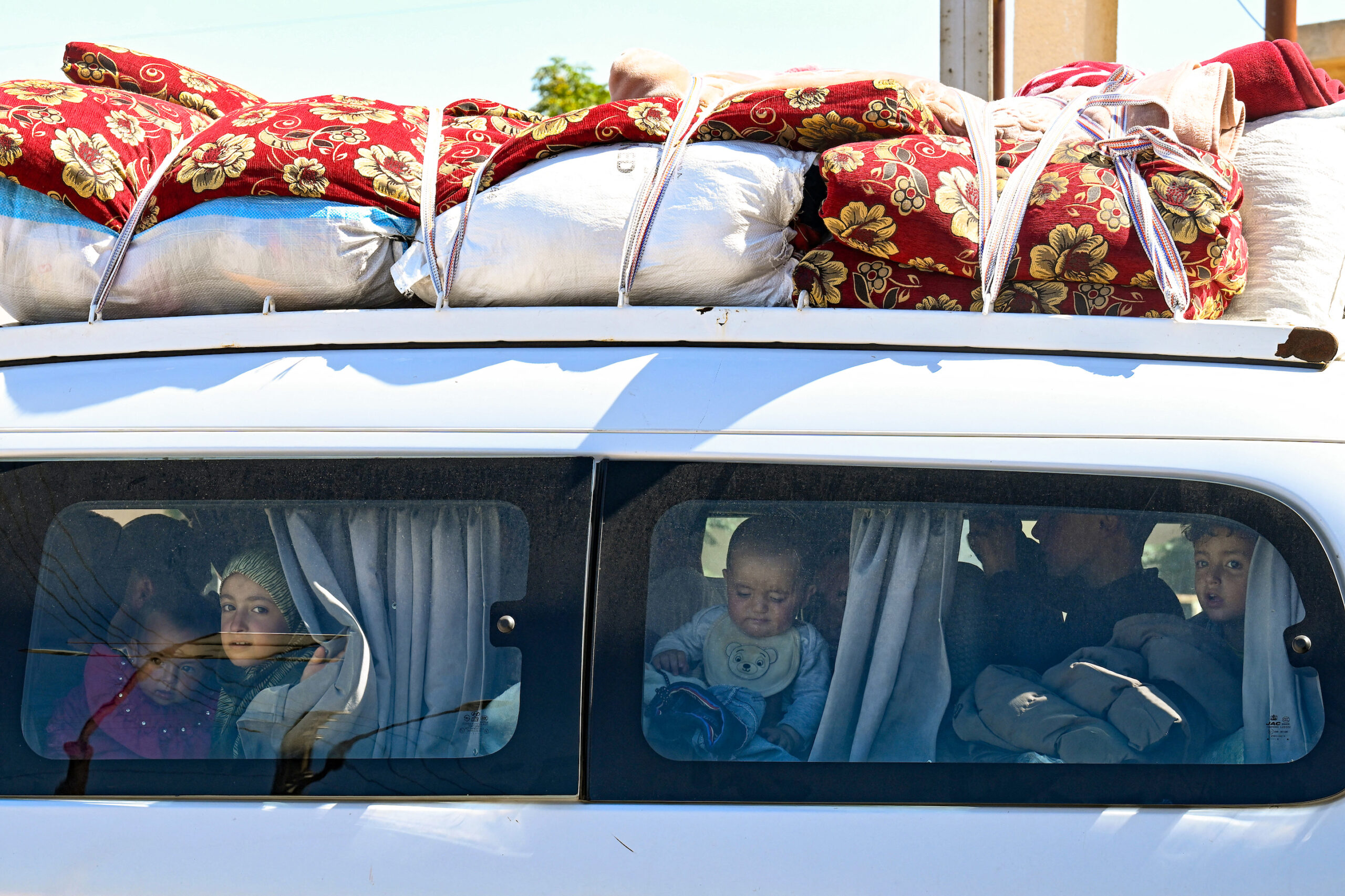
Caught between the perils of returning to unsafe Syria and staying in Lebanon, where they suffer deadly Israeli airstrikes and growing anti-refugee sentiment, Syrian refugees face agonizing choices in the wake of the Israeli war on Lebanon.
Relentless Israeli bombardment on South Lebanon, the Beqaa, and Beirut, has displaced nearly 1.2 million people, Lebanese and foreigners, from their homes as of October 8. This has created extremely challenging humanitarian conditions in a country already grappling with a crippling economic collapse, made worse governmental failures at the political and administrative levels.
For nearly 1.5 million Syrian refugees in Lebanon, the war has rendered their already dire situation even worse. Israeli airstrikes have made no distinction between Lebanese and Syrians, resulting in nearly 200 Syrians killed—at least 2,141 have been killed and over 10,000 injured since October 8, 2023.
Syrian refugees, forced to flee their war-torn country in search of safety in Lebanon, now find themselves displaced once more. This time, they face a less hospitable Lebanese environment, without the international attention and humanitarian support they received during the height of the Syrian conflict. Thousands of Syrians who were displaced from southern Lebanon, the Beqaa Valley, and the southern suburbs of Beirut over the past two weeks now find themselves homeless and without assistance, particularly those unable to return to Syria due to fears of persecution, arbitrary arrest, or forced conscription.
To discuss the situation of Syrian refugees in Lebanon and the challenges they face, The Tahrir Institute for Middle East Policy (TIMEP) spoke with Suha Tutunji, head of the Refugee Education Program at Jusoor, a non-profit organization dedicated to providing educational opportunities for Syrian refugees worldwide.
How has the war affected Syrian refugees in Lebanon since October 2023, and following the recent Israeli escalations?
After the attacks in October last year, Syrian refugees were not immediately affected, and we continued working with them as usual. However, after the recent escalation, there has been significant pressure on Syrian refugees, as many have nowhere to go as the conflict expanded. The psychological toll is also considerable, as refugees recall the traumatic experiences of living under bombardment and the harsh conditions of their displacement from Syria.
Some Syrian families have returned to Syria, specifically those who face no legal or political barriers preventing their return, and have been staying in Lebanon primarily because the economic conditions here remain better for them than in Syria, despite everything. The remaining refugees are exercising caution, trying not to move around too much.
The displaced have now become hosts to other displaced individuals who need their help
A sizable portion of them, who are living in private houses [not in tented settlements], have taken in displaced Syrian families from the south. I know of one family that is hosting over 20 people in their home. How do they feed and care for them when their own income is already meager? How can so many people live in an apartment that can barely house one family? This presents an enormous challenge, as the displaced have now become hosts to other displaced individuals who need their help. Coupled with psychological pressures and the fear of forced return to Syria, the situation on the ground is dire.
What type of support do Syrian displaced persons receive in Lebanon?
Syrian refugees in Lebanon can be divided into three categories. First, there are those who can return to Syria—around 300,000 have returned these past three weeks. Their return has become easier since the Syrian government temporarily paused collecting a $100 fee from each returnee at the border. [Several people have already been arrested upon their return to Syria]. Then there are those who have gone to shelters designated specifically for Syrians, though access to these facilities is extremely limited due to the scarcity of available spaces. For instance, some schools that served Syrian refugees before the recent war have been repurposed as shelters for the displaced. These centers are insufficient to accommodate the large numbers of displaced Syrians. Finally, there are those who have found themselves homeless, sleeping on the streets and in public parks; their conditions are the hardest of all.
There is a severe lack of support for Syrian refugees on the ground. Shelters are struggling to raise funds for basic necessities like medicine, diapers, and infant formula. I know people who run a school for Syrian refugees that has taken in over 500 displaced families. They are constantly fundraising and operating soup kitchens to provide food for these families.
These are just examples of cases we are aware of, the fate of many other displaced Syrians remains uncertain.
In addition, support for Syrian refugees in Lebanon is geographically uneven. Regions like the Western Beqaa and northern cities such as Tripoli offer more assistance. However, in Mount Lebanon, where the anti-Syrian sentiment is more prevalent, conditions for refugees are significantly more challenging. In Beirut, the number of displaced and injured Lebanese is high, which limits the resources available for Syrian refugees.
How do anti-Syrian refugee sentiments and policies in Lebanon affect their situation as newly displaced individuals?
The rift between Syrian and Lebanese individuals has widened, even among the displaced. Separate shelters have been established for each group, leading to instances of Syrian refugees being turned away from schools and centers designated for the Lebanese. In some cases, Syrian refugees have even been evicted from shelters to accommodate displaced Lebanese populations.
To protect refugees, awareness campaigns are necessary. However, given the current tensions, it is unfortunately essential to separate Lebanese and Syrian displaced populations to prevent further hostility. Providing aid to Syrians without also assisting Lebanese would exacerbate existing tensions. Therefore, the situation appears to be deteriorating, and it is likely that more Syrians will be compelled to return to their home country.
What message should be conveyed to foreign governments, international aid organizations and the governments in Lebanon and Syria?
The current level of international aid is insufficient to meet the needs of the Lebanese population, let alone the Syrian refugees in Lebanon. With over one million internally displaced, the burden on the country is immense. While the Lebanese will understandably be prioritized, advocacy efforts must emphasize that Syrians are human beings as well, and they cannot be left to sleep on the streets simply because they are not citizens of the host country. I know of a Syrian family who sought refuge in a destroyed building because they were unable to find shelter in Mount Lebanon. When local authorities were contacted for assistance, they responded that they could only help Lebanese citizens. Eventually, a friend of mine rented a van at her own expense to transport the family to Western Beqaa in search of a safe place to stay.
Given the current state of Lebanon, I doubt the Lebanese government can intervene effectively. With the country facing so many challenges, the authorities are stretched thin. However, the Syrian regime could play a role by facilitating the safe return of Syrian refugees, as it may be safer for them to return to secure areas in Syria. Unfortunately, the outlook remains bleak, with little hope for improvement in the near future.