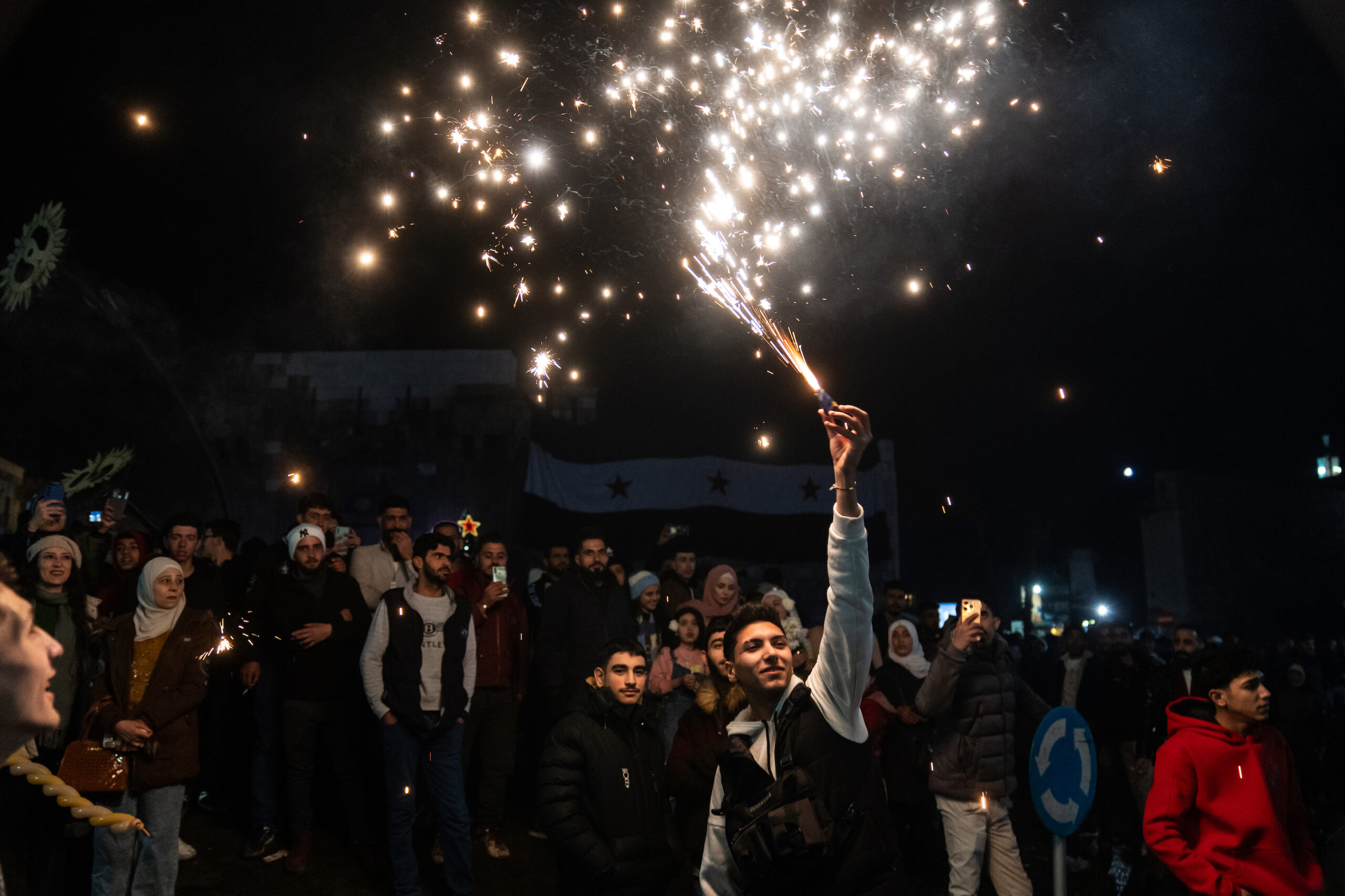
In the year ahead, the MENA region faces an array of growing risks and a handful of important opportunities, all of which require precise and strategic thinking.
Israel’s devastation of Gaza, which a growing consensus of rights groups have concluded is a genocide shows no sign of abating. The anger and despair born of this harrowing level of violence with no meaningful effort to end it will undoubtedly have grave consequences in the near future. Sudan’s war will enter its third year in April as belligerents do not face real pressure to negotiate. In Lebanon, the temporary ceasefire remains precarious with a serious risk that conflict could escalate once again. The country has also the heavy task of focusing on its political and economic reconstruction.
Against this worrying backdrop, the fall of Assad in Syria offers a glimmer of hope. More needs to be done to drop sectoral sanctions so that Syria has any hope of rebuilding and fostering economic opportunities that can sustain both the existing Syrian population as well as those who are choosing to return and rebuild their country.
Public anger in Egypt is growing and the regime is deploying higher levels of repression to contain the fallout from its economic crisis. Egypt’s Western partners are increasingly ignoring repression while failing to effectively press for inclusive and sustainable economic and political reform. Tunisia’s president continues to muddle along, relying increasingly on repression while the country’s economy posts virtually no growth, all but guaranteeing he will fail to address the central source of the public’s anger with their government, their deteriorating standard of living and lack of economic opportunity.
Meanwhile in Europe, a growing shift to the political right has strengthened anti-migrant sentiment and deepened efforts at externalization. Many leaders in the MENA region have joined their European counterparts in scapegoating migrants to deflect blame for their respective failings, thus making clear the unsustainability of externalization as a project.
We asked TIMEP’s nonresident fellows and staff what they believe policymakers should focus on in 2025, based on their expertise and mandates. Here are their answers.
Health, Displacement, and Technology

In 2025, critical health challenges in the MENA region will continue to be deeply intertwined with violence and its legacies. The intersection of conflicts, health system fragility, and the increasing weaponization of health—ranging from targeting healthcare facilities to restricting medical supplies—emerges as pressing concerns.
The ongoing genocide in Gaza demands urgent global attention, as deliberate attacks on civilians and critical infrastructure has left thousands disabled without basic humanitarian aid.
In Syria, the challenges of reconstruction after the fall of the Assad regime also reveal the long enduring impacts of violence. The destruction of almost half of the country’s health infrastructure throughout the past decade and the killing or exodus of medical personnel have created immense gaps in medical service provision.
These humanitarian crises are political in essence, rooted in lack of accountability for crimes against humanity. Advocacy and policy interventions must prioritize the protection of health workers and facilities, ensure unimpeded access to medical aid, and provide sustained support for individuals with acquired disabilities. Mental health support must also be integrated into broader health initiatives, with a focus on marginalized and displaced populations.
Efforts must focus on dismantling systems that weaponize health, enforce accountability for war crimes, establish clear international norms for protecting healthcare in conflict, and uphold the sanctity of health as a fundamental human right that communities across the MENA region can enjoy.

2024 was a particularly dreadful year for the Levant. Israel’s seemingly endless crimes committed in Gaza have created a human catastrophe that was, in part and to devastating effect, replicated in Lebanon.
Israel’s use of force against civilians and UN forces as well as unilaterally invading sovereign nations has critically undermined the international rules-based order designed to regulate state actions and ward off instability. The principle of laws is only as strong as those willing to enforce them. So far, the Global North has made policy choices that have painted a picture that human rights are not a priority.
This is seen not only in the response to Israel’s aggressions but also in the provision of material and financial support to MENA states in exchange for slowing migration to Europe. These migration agreements are made with the full knowledge of the increasingly poor human rights record in these states, particularly toward migrants.
To create a more peaceful region, we must uphold the values of protecting those fleeing conflict and, just as importantly considering the fall of Assad, facilitate dignified returns for those who seek to return to Syria.
In 2025, policymakers must address the root causes of conflict displacement with lasting mediation, protect innocents caught in war, and, crucially, avoid rewarding states who undermine these rules.

In 2025, policymakers must address the growing weaponization of technology in conflict as the boundaries between traditional and digital warfare blur. In 2024, we continued to witness how internet shutdowns, surveillance, and online attacks—combined with the dystopian use of AI-powered technologies for targeted attacks—have further deepened people’s suffering across the region. Israel has used these tactics in Gaza and Lebanon and similar patterns emerged in Sudan. Urgent frameworks are needed to mitigate such attacks, ensure accountability for violations of international law, and protect civilians.
Internet shutdowns in conflict zones, including Gaza and Sudan, remain a critical issue. Beyond silencing dissent and disrupting communication, shutdowns have severely hindered humanitarian aid and essential services, leaving populations even more vulnerable. Recognizing the internet as vital infrastructure and establishing international mechanisms to prevent shutdowns is crucial for safeguarding fundamental rights.
Technology companies play a pivotal role in shaping the digital battlefield. From amplifying disinformation to inconsistently enforcing content moderation, their actions—or lack thereof—significantly impact communities and the trajectory of conflicts. In 2025, policymakers must prioritize corporate accountability and transparency to mitigate these harms. Tech platforms must adopt rights-respecting practices and ensure their operations do not exacerbate conflicts and safeguard the rights of users, including the right to freedom of expression.
Sudan

2025 is a critical year for Sudan as the conflict persists, demanding immediate and multifaceted policy actions to address the evolving nature of the violence.
The latest US sanction on the leader of Rapid Support Forces and UAE-based companies that are implicated in supplying the group with weapons is a significant move. US policymakers should also consider sanctioning Abdel Fattah al-Burhan, the leader of the Sudanese Armed Forces, as the forces he is leading have also committed atrocities during the war.
Another top priority must be unifying Sudan’s fragmented civil society and enhancing accountability. This will be crucial in advocating for peace and justice and creating safe spaces for dialogue. It will be important to establish robust legal frameworks to document and address the crimes that are often forgotten or left unaddressed, including forced marriages and violations of land and property rights.
Advocates should work to keep religious freedoms and the protection of religious minorities a priority with policymakers, as the large number of violations on other fronts could overshadow it.
More work is needed with policymakers in countries such as the United States and the United Kingdom to place Sudan’s issues on their priorities list. A similar effort is also needed with regional bodies, such the African Union and the European Union.
By addressing Sudan’s interconnected challenges—rebuilding civil society, fostering accountability, mitigating regional power struggles, and leveraging international support—the country can move closer to peace and stability in 2025.
The calls to establish governing bodies in areas across Sudan that are under Rapid Support Forces’ control were becoming louder toward the end of 2024 and are continuing into 2025. Other calls to establish a “government in exile” have also emerged. Such structures evidently lack legitimacy, and international forces should steer away from granting them any form of recognition or support.
Such bodies, it is argued, could fill the administrative vacuum in the country. However, this perspective disregards the localised efforts that have been on the frontline of humanitarian response and fails to account for the risks of irreversibly dividing the country.
While sanctions could be a tool to pressure actors to end the war in Sudan, the international community has been deliberately overlooking the role played by regional supporters of the warring parties which limits the sanctions’ effectiveness.
In 2024, there was reported famine in five locations across the country, with projections of it expanding to more areas in the current year. The dwindling humanitarian funds, lengthy bureaucratic procedures, and access to aid are all relevant to the discussion of food security in Sudan.
In 2025, more than ever, the warring parties, Sudanese politicians, but also regional and international actors must learn from Sudan’s past. They also need to emphasize the impact the country’s limited resources, regional fragility, and questions about legitimacy could have for Sudan’s future.
Syria and Lebanon

In 2025, the policy community must focus its efforts on supporting the democratic potential and transition of a free, post-Assad Syria. The Syrian civil society, and the Syrian people more broadly, must be backed in their pursuit of transitional justice.
Scenes from Sednaya prison and Gaza are a reminder that many regimes currently in power in the Middle East survive and persist through oppressing, disappearing, and killing their populations. That cannot be the region’s destiny. Military tribunals pursuing journalists and activists should be dismantled, and security agencies engaging in racketeering and abuse need to be brought down.
A free and democratic Syria will have positive repercussions across the region, especially Lebanon, where the former regime and its Lebanese allies have stifled democratic efforts and civil liberties for decades. Lebanon also stands to benefit greatly from the economic opportunities that a just reconstruction of Syria might entail. Those in Lebanon invested in a free, democratic, and just future for their country must seize the gravity of the current moment and mobilize politically toward a better future for the country.
My hope for 2025 is for an Arab world free of overcrowded prisons, murderous security agencies, and kleptocratic elites that destroy the wealth and dignity of people from Tunis to Baghdad. No more jailers or bondmen, no more dead or disappeared, and no more poverty and misery.

In 2025, there are three main issues that policymakers should keep an eye on in Syria.
Political transition and governance: The new Syrian leadership and government will navigate a tough transition phase that will determine the country’s future. The new government’s capability to provide essential services and maintain functional state institutions across Syria is crucial. Additionally, it will also be vital to assess whether the new authorities will succeed in leading an inclusive political process that steers the country away from the violence of the past 14 years.
Reconstruction and sanctions: Given the dire state of Syria’s collapsing economy and devastated infrastructure, reconstruction is critical to pave the way for the return of over 14 million Syrians who were displaced, internally and abroad. The potential lifting of sanctions will significantly impact the country’s recovery and stability.
Rule of law and accountability: In 2025, rule of law will be crucial in Syria’s post-conflict environment, as the transitional government faces significant challenges in enforcing the law and maintaining security and order. Accountability will be one of the essential and pressing issues as well, as the crimes committed by the Assad regime and other parties over the course of the war may drive some to seek justice on their own, potentially reigniting a cycle of violence in the country.
Egypt

The urban development sector in Egypt, a cornerstone of the government’s program over the past decade, is undergoing rapid changes.
In November 2024, Egypt’s supreme court ruled to annul some provisions of the old rent law which governs rent controls, raising concerns among many tenants who would be unable to pay market prices to rent properties they have lived in for generations in some cases. Another concern is that the New Urban Communities Authorities, the government’s main urban development arm, could take possession of some of the affected properties using some of the expropriation laws.
Egyptian authorities have practiced forced eviction of residents while disregarding international regulations governing such processes, a policy that is likely to continue in 2025. In many cases, the government has done so without providing evictees with reasonable replacement housing and just reparations. A significant gap also exists in Egyptian legislation, as there are no clear legal frameworks dealing with evictions, allowing for arbitrary interpretations and unfair practices against residents.
In 2025, Egyptian authorities must reassess current urban policies and address the legal gaps related to forced evictions, ensure the adherence to international standards that protect affected residents’ rights, and adopt comprehensive policies aimed at achieving fair and sustainable development.

2025 presents Egypt with significant challenges at the policy level. The proposed amendments to the criminal procedures law threatens to impact the criminal justice system and citizens’ rights.
With regards to pre-trial detention, a practice used as a tool to punish government critics, authorities are referring detainees to trial instead of releasing them, further complicating the crisis.
Additionally, the newly passed asylum law raises concerns about its impact on refugee rights, given its underlying philosophy and the ambiguity surrounding its implementation mechanisms.
Economically, pressures on citizens are set to increase as the government continues to implement measures attached to its program with the International Monetary Fund.
The upcoming parliamentary elections at the end of 2025 pose an additional political challenge in Egypt, as conducting them under a closed-list system means they will likely result in a parliament lacking genuine representation.
Egyptian authorities are expected to carry out extensive legislative amendments until July 2025, which require close monitoring from rights groups to ensure compliance with the constitution and the protection of rights and freedoms.
Tunisia

Tunisia remains far from fulfilling the goals of the 2011 revolution, especially in terms of improving the economic well-being of its citizens and establishing a democratic system with independent institutions. Furthermore, President Kais Saied in 2024 tightened his grip on power following his re-election for a second term.
It has become increasingly hard to address public affairs freely with the adoption of laws that hinder freedom of expression. Activists and journalists have been prosecuted under the recent Decree 54 on cybercrime along with outdated articles from the criminal code. These measures have undermined the role of civil society in holding authorities accountable, critiquing public policing, and preserving the civic space in general.
It is imperative today not only to advocate for economic reforms, but also to preserve the civic dynamics in Tunisia by focusing on potential amendments to laws related to fundamental freedoms. These include the repressive law on associations that will put civil society at risk, and protecting freedom of speech, considered as the most important achievements of the revolution. In 2025, every effort should be put in place to prevent a further deterioration of rights and freedoms in Tunisia. The preservation of dynamic civic forces and a diversity in opinions is a necessity to tackle the challenges the country is facing.
Regional
The year 2024 was marked by an intensification of crackdowns on LGBTQI+ individuals and communities across the MENA region. Political leaders increasingly used the oppression of sexual and gender-diverse groups as a populist tool to reinforce their commitment to religious and culturally imposed norms. This trend unfolded amidst a global rise in conservatism, where many have aligned more strongly with national and religious identities in response to various global developments. For years, LGBTQI+ individuals in the MENA region have faced violence, hate crimes, torture, and dehumanization at the hands of their own governments.
It is crucial that policymakers understand that the criminalization of LGBTQI+ people is not only a human rights violation but also a legacy of colonialism, deeply embedded in the region’s legal and social structures. LGBTQI+ individuals deserve to be treated with dignity, equality, and full citizenship. Their exclusion and marginalization, particularly in times of crisis, must be addressed. Political leaders in 2025 must recognize that the rights and liberation of queer people are an integral part of the collective struggle for justice and freedom for all citizens.

Without critical shifts in policy making in 2025, US foreign policy in MENA will continue to have devastating effects on the people of the region. As the Trump administration and Congressional Republicans take power in Washington, the US must use its leverage to mediate an end to conflicts and to support democratic transitions in the region.
With the US remaining the largest supplier of arms to Israel, the Trump administration should use its leverage to bring about an immediate ceasefire in Gaza and to prevent the Israeli government from implementing the UNRWA ban or annexing the West Bank. The US, with France, also has a key role to play in ensuring the tenuous ceasefire in Lebanon persists, and in providing resources for both political and economic reconstruction.
In Sudan, the US has taken a significant step in sanctioning Hemedti and determining that the RSF has committed genocide in Darfur. The Trump administration, which has rare bipartisan Congressional support on Sudan, should take advantage of this momentum to end the war, and appoint a Presidential Envoy who can convene new peace talks with belligerents and Sudanese civilians. Sudanese civilians and civil society groups cannot be an afterthought—they must be centered in discussions around the country’s political future.
Finally, the US will remain a major player in Syria’s delicate post-Assad regime transition, as it maintains sectoral sanctions on the country, in addition to 2,000 US troops on the ground. The Trump administration should lead Western countries in lifting these sanctions and put forward robust incentives for an inclusive and democratic transition that gives Syrians their best chance at recovery and a political transition that reflects their aspirations.


The situation in the Levant remains volatile, allowing for the possibility of further violence. The genocide in Gaza continues, while Israel occupies more land in Syria and commits numerous violations of the ceasefire agreement with Lebanon. The need for justice and accountability for war crimes may take several years, but will begin with necessary documentation and legal analysis.
The world is hopeful that the transition of power in Syria will allow for the advancement of human rights and democratic governance. However, those responsible for international crimes must face accountability, and other actors—including entities complicit in financing human rights abuses—must be held to account. Other transitional justice mechanisms should be put in place, such as truth-seeking to uncover the fate and whereabouts of the missing and disappeared in Syria, holistic reparation for victims and impacted persons, institutional reforms, and other guarantees that atrocities will never occur again.
The fall of the Assad regime could inspire demands for human rights and freedoms in Egypt and Tunisia, potentially met with increased repression. There is a persistent need to closely monitor these contexts and amplify democratic and human rights advancement.
In Lebanon, the international community must strongly support the calls of civil society and victims’ groups for political reforms, justice, and adherence to rule of law, and ensure that they are engaged meaningfully in these processes.
The war in Sudan continues unabated. Ongoing, and potentially more creative efforts are needed to add pressure for an end to the violence and accountability of perpetrators.

The need for financing and progressive, sustainable socio-economic reforms will continue to be a major challenge for the region.
As Syria and Lebanon stabilize, major financing will be needed to rebuild most of the infrastructure destroyed during war, particularly housing. Limited access to international money markets, financial sanctions on Syria, perceived risks of money laundering and terrorist financing in Lebanon, and the weakening of traditional post-conflict backers, all pose challenges to the funding of needed reconstruction efforts.
Meanwhile, amid closing civic space and rising oppression, Egypt and Tunisia continue to struggle with high inflation and rising cost of living. Egypt is expected to continue its IMF-backed austerity policy of reducing public spending and maintaining high indirect taxes that disproportionately affect low-income households, all amidst rising poverty and inequality levels. Tunisia, meanwhile, is charting a different path with progressive tax reform and increasing risky domestic borrowing, in an effort to address its chronic public budget deficit.
Governments across the region are also expected to continue seeking international financing through bad money-for-border-security deals with the European Union and other actors and through externally financed export-oriented, opaque “green” energy project deals.
Inflation, oppression, conflict, climate injustice, inequalities, inaccessibility to basic services, and the rising cost of living will continue to contribute to rising social tensions across the MENA region, threatening the already weakened and fragile communities.