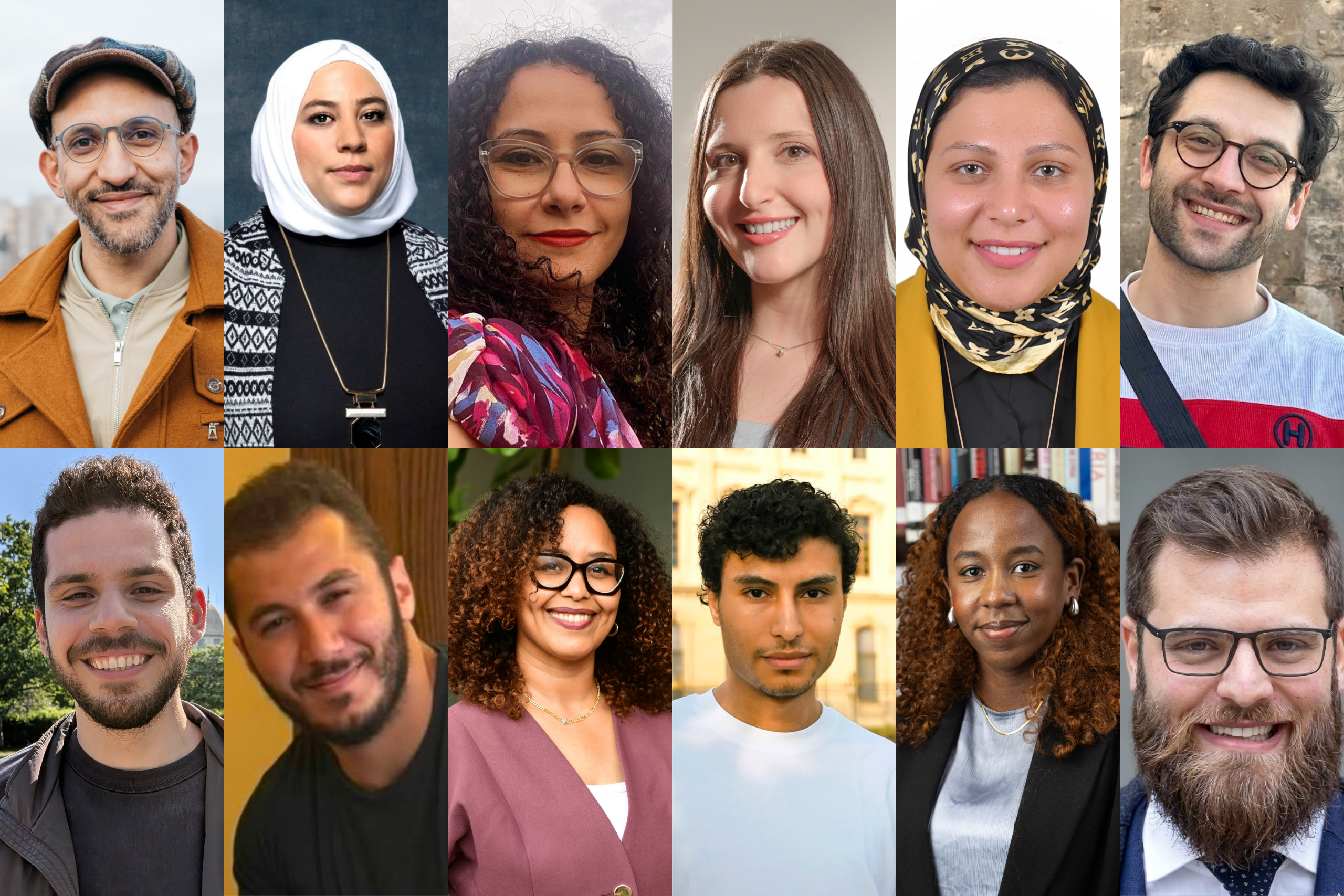
TIMEP is delighted to announce the 12 members of its 2026-2027 Nonresident Fellowship cohort!
As the war in Sudan rages on, devastating the lives of civilians in the process; as Lebanon navigates a sensitive political and security moment that will determine the country’s future; as Syria reimagines a new reality post-Assad and takes steps to advance a delicate transition; and as assaults on governance and the rule of law bring about harsh economic and political realities on citizens in Tunisia and Egypt, the people of the Middle East and North Africa (MENA) region find themselves at critical junctures. It is in this context that it becomes more important than ever for policymaking in and on the region to be informed and shaped by the insights of those living the impact of these policies, along with new ideas and creative paths forward.
TIMEP’s fellowship program does just that, positioning rising leaders from and in the MENA region to bring country and thematic expertise and lived experience into the policy discourse, while offering a space for each fellow to build up the skills, network, and platform they need to be able to do this work long-term, and to make impactful connections across the region to advance cross-regional solidarity and high-impact collaboration.
Throughout their one-year fellowship, TIMEP’s 2026-2027 nonresident fellows will undertake innovative programming and produce cutting-edge analysis on the MENA region’s top challenges in Egypt, Tunisia, Sudan, Syria, and Lebanon. With diverse backgrounds in journalism, law, economics, technology, organizing, and more, they come together to partake in creative problem solving, to craft and advance an alternate set of policies, and to articulate an alternative vision for the future of the region.

Nada Nashat is the head of the Women’s Public Participation Program at the Center for Egyptian Women’s Legal Assistance (CEWLA). The program promotes economic and social rights, supports the feminist movement, analyzes the effect of climate change from a gender perspective, focuses on the Women, Peace and Security agenda, and pushes for international advocacy. Nada has been CEWLA’s advocacy coordinator for the past 10 years. She has given lectures as a guest speaker on the situation of women’s rights in Egypt at a number of universities. Nada’s writing and research has been published in several local and international outlets and institutions. Read her full bio here.
Fellowship Mandate: Women, Rights, and Accountability (Egypt)

Shoroq Sallam is an Egyptian human rights lawyer and currently serves as the Director of the Legal Unit at the Egyptian Front for Human Rights. She has more than 13 years of professional experience in human rights, with a particular focus on criminal justice, the rule of law, and the protection of fundamental rights and freedoms. Her work centers on criminal justice issues related to grave human rights violations, including torture, enforced disappearance, arbitrary detention, and violations of the right to a fair trial. She provides legal support to political detainees and works on documenting human rights violations through direct engagement with victims and their families, in addition to preparing legal files and human rights reports that highlight patterns of abuse within Egypt’s criminal justice system. Read her full bio here.
Fellowship Mandate: Criminal Justice Reform (Egypt)
She is also the institute’s 2026-2027 Sarah Hegazi Fellow.

Ramy Raoof Halim is a technologist, security researcher, and advisor who works with human rights defenders, journalists, and civil society organizations operating in high-risk environments worldwide. Over the past 15 years, he has contributed to investigations into state-sponsored surveillance, cyberattacks, and censorship across multiple regions, as well as to advocacy and litigation efforts aimed at holding governments, technology companies, and telecommunications providers accountable. Ramy has worked on digital security, threat research, and infrastructure resilience with organizations including the European Union, the Open Technology Fund, Amnesty International, Citizen Lab, the Egyptian Initiative for Personal Rights, and the International Committee of the Red Cross. Read his full bio here.
Fellowship Mandate: Surveillance and Technology (Egypt)

Raghdan Orsud is a Sudanese media professional and cofounder of independent Sudanese media platform Beam Reports, working at the intersection of technology, development, and information. With over a decade of experience across some of the world’s leading institutions, she has shaped how information flows in some of the most complex and underreported contexts globally, with a sharp focus on Sudan, the MENA region, and Africa. Her career spans advocacy and communications leadership at Save the Children International; global elections programming at Meta/Facebook; and media and civic engagement work at Internews and the National Democratic Institute. Across these roles, she has consistently operated where technology, policy, and public information converge, building systems, strategies, and narratives that matter. Read her full bio here.
Fellowship Mandate: Information Warfare (Sudan)

Leena Badri is an advocacy professional who works on conflict, governance, and political economy, with a focus on Sudan. She is an Associate Academy Fellow at Chatham House’s International Security Programme, where she has researched topics related to global conflict prevention, and is a member of the Mo Ibrahim Foundation’s Now Generation Network. Leena has contributed to research with the Sudanese Center for Policy Studies, a think tank that emerged after the 2019 revolution with a mission of fostering citizen-based public policy, and she has focused on Sudan’s foreign policy, regional alignments, and internal dynamics. She has also been a member of the Sudan Solidarity Collective, a volunteer-led organization of Sudanese academics, community activists, and professionals that supports grassroots civil society formations at the frontlines of relief efforts in Sudan. Read her full bio here.
Fellowship Mandate: Governance and Conflict (Sudan)
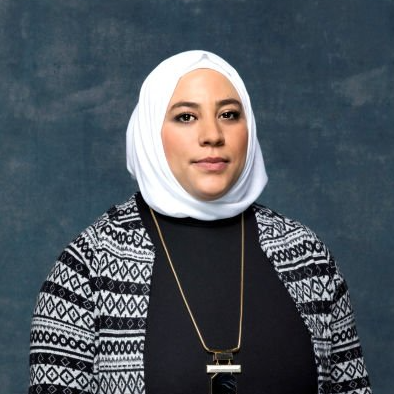
Kholoud Helmi is a Syrian journalist and civil society advocate whose work brings together independent media, survivor-led advocacy, and justice policy. She has worked for many years on issues related to Syria, including enforced disappearance, detention, displacement, accountability, and the experiences of Syrian communities inside the country and in exile. She is the co-founder of the independent Syrian media organization Enab Baladi, where she helps shape reporting on governance, services, and social issues across the country. Kholoud is also engaged with Families for Freedom, a survivor-led movement advocating for detainees and the forcibly disappeared in Syria. Her work is rooted in the belief that survivors and families should be recognized not only as witnesses but also as actors who shape justice and accountability discussions. Read her full bio here.
Fellowship Mandate: Survivor-Centric Justice and Policy (Syria)
She is also the institute’s 2026-2027 Mohamed Aboelgheit Fellow.

Alhakam Shaar is an interdisciplinary conflict researcher and social anthropologist. Over the past decade, he has worked on post-conflict reconstruction, heritage preservation, and migration research. He was a Holbrooke Fellow for The Aleppo Project, which focuses on how to rebuild urban life after conflict through a collaboration between Syrian refugees, academics, policy experts, and students, at Central European University (CEU) and is a co-founding member of Liqa al-Umran (The Urbanism Gathering), a platform for connection and dialogue on reconstruction in Syria. Alhakam has contributed to numerous projects, such as preserving Aleppian intangible heritage with the Modern Endangered Archives Program at UCLA, mapping Syrian diaspora organizations in Germany with SVR in Berlin, and digitizing the Comparative Encyclopedia of Aleppo with Al-Adiyat Archaeological Society in Aleppo. Read his full bio here.
Fellowship Mandate: Inclusive and Participatory Reconstruction (Syria)

Zakaria Al Shmaly is a cofounder of the Change for Syria network, a grassroots initiative promoting participation in Syria’s political, civic, and cultural spheres. He represents the network in consultations on Syria by various EU bodies. He is also a cofounder and co-host of the Syria Spectrum podcast, that focuses on policy relevant analysis on Syrian affairs. Zakaria is currently a Teaching Fellow in European Studies at Maastricht University. He previously served as a Research Analyst at Carnegie Europe, and worked with the European Parliament’s Committee on Foreign Affairs. He has also held positions with the International NGO Safety Organisation and the Norwegian Refugee Council, supporting humanitarian and protection work in Syria and the region. His writing spans from think tank, advocacy, and academic publications as well as novels and fiction. Read his full bio here.
Fellowship Mandate: EU-Syria Policy (Syria)

Jad Baghdadi is a doctoral candidate and Rhodes Scholar at the University of Oxford, where his research focuses on state-capital relations, class dynamics, sectarianism, and capital accumulation across the MENA region. Jad co-leads several research projects on the political economy of Syria and Lebanon, including on wartime business-state networks, private sector responses to Lebanon’s financial crisis, and the emerging institutional landscape of post-war Syria. His writings and analysis have appeared in a range of policy, media, and academic outlets. Jad has previously worked as a research analyst at The Economist, where he produced analysis and indices on sustainability, livability, and health across the MENA region. He has also held research roles at the LSE Middle East Centre and the United Nations Office of the High Commissioner for Human Rights. Read his full bio here.
Fellowship Mandate: Political Economy (Levant)
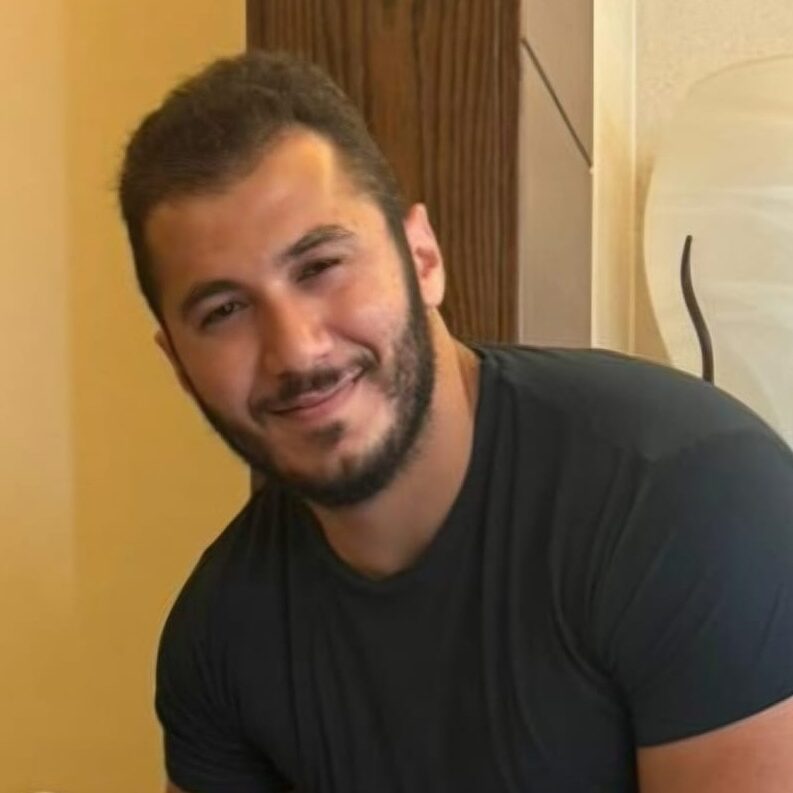
Karim Safieddine is a Lebanese organizer and researcher. His political writing and research, published in numerous local, regional, and international platforms, explore the intersections between politics, social movements, and the democratic struggle in Lebanon and the MENA region. He regularly writes about social movements, foreign policy, and political transitions. Karim is affiliated with the Mada Network, a non-sectarian and non-partisan youth network in Lebanon, and Masar, a secular, democratic, progressive movement that bridges together likeminded grassroots formations across regions and sectors. Read his full bio here.
Fellowship Mandate: Politics and Reform (Lebanon)

Gaelle Abi Khalil is a policy researcher specializing in governance, state-society relations, and security policy in Lebanon and the Middle East. She has over eight years of professional experience working on governance, public and security sector reform, and policy research in Lebanon and the MENA region. Her commentary and analysis on Lebanon’s political and security landscape have appeared in local and regional media platforms. Read her full bio here.
Fellowship Mandate: Reconstruction and Security Governance (Lebanon)
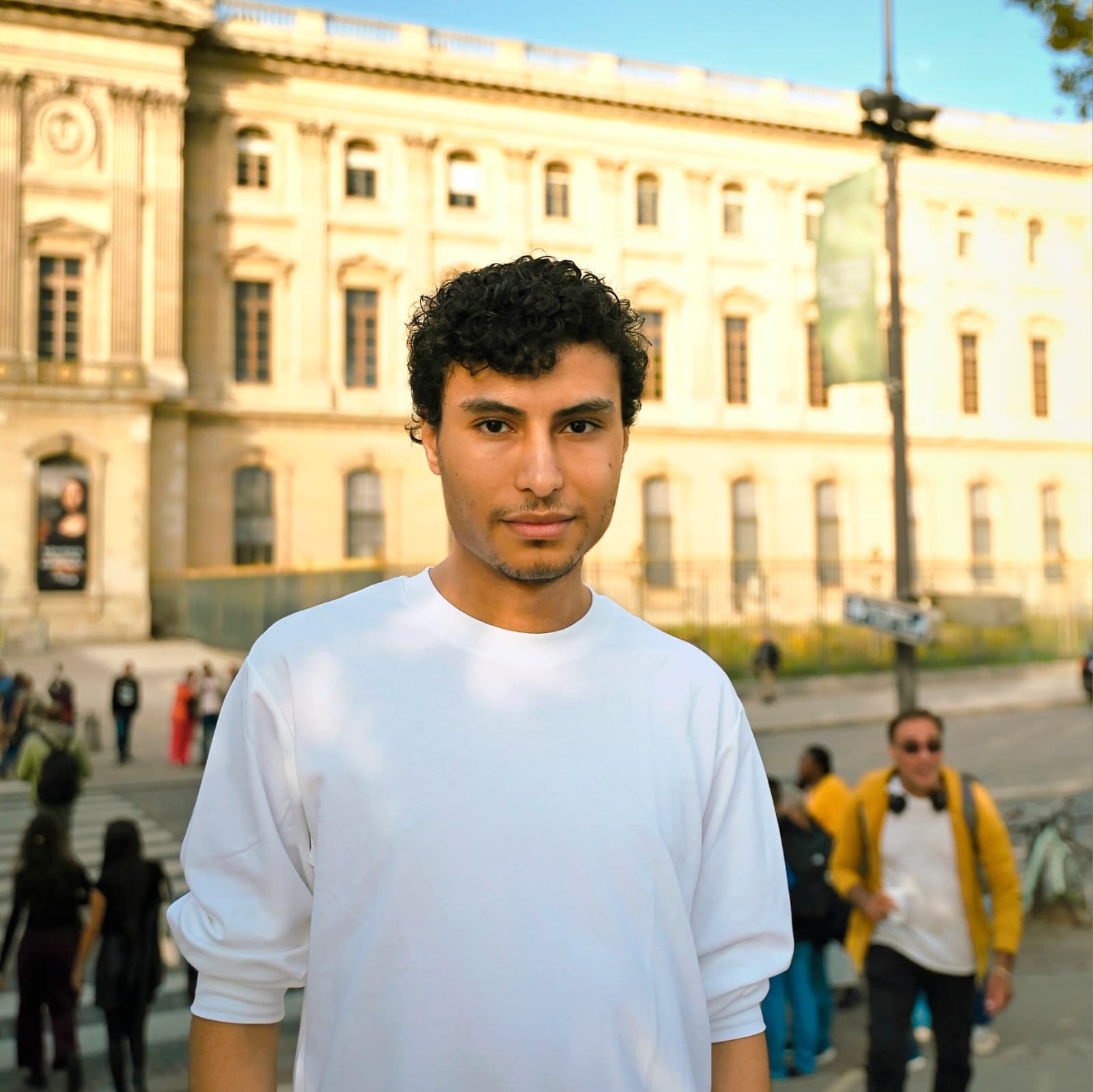
Mondher Tounsi is a political scientist and analyst specializing in migration governance, political economy, and security in the MENA region, with a particular focus on Tunisia and Mediterranean affairs. He has worked as a consultant with a number of think tanks and civil society organizations on Tunisia, producing political risk analysis and research on migration, governance, and regional affairs for international stakeholders. Alongside his analytical work, Mondher is pursuing a PhD at the University of Oxford, where his research focuses on authoritarian consolidation and state transformation in the MENA region in the post-2020 context. Read his full bio here.
Fellowship Mandate: Governance and the Rule of Law (Tunisia)